I remember getting a call from a property manager in Fishers last January. She was frantic—a pothole had opened up right in front of the main entrance of her medical building, and patients were literally stepping around it. She’d tried a bag of cold patch from the hardware store, but after a few days of freeze-thaw cycles and plows scraping the lot, it was like she’d never touched it. That’s the thing about cold patch vs hot mix asphalt: one buys you time, the other buys you peace of mind. But you need both, depending on the season and what your lot can handle.
Cold Patch vs Hot Mix: What’s the Difference?
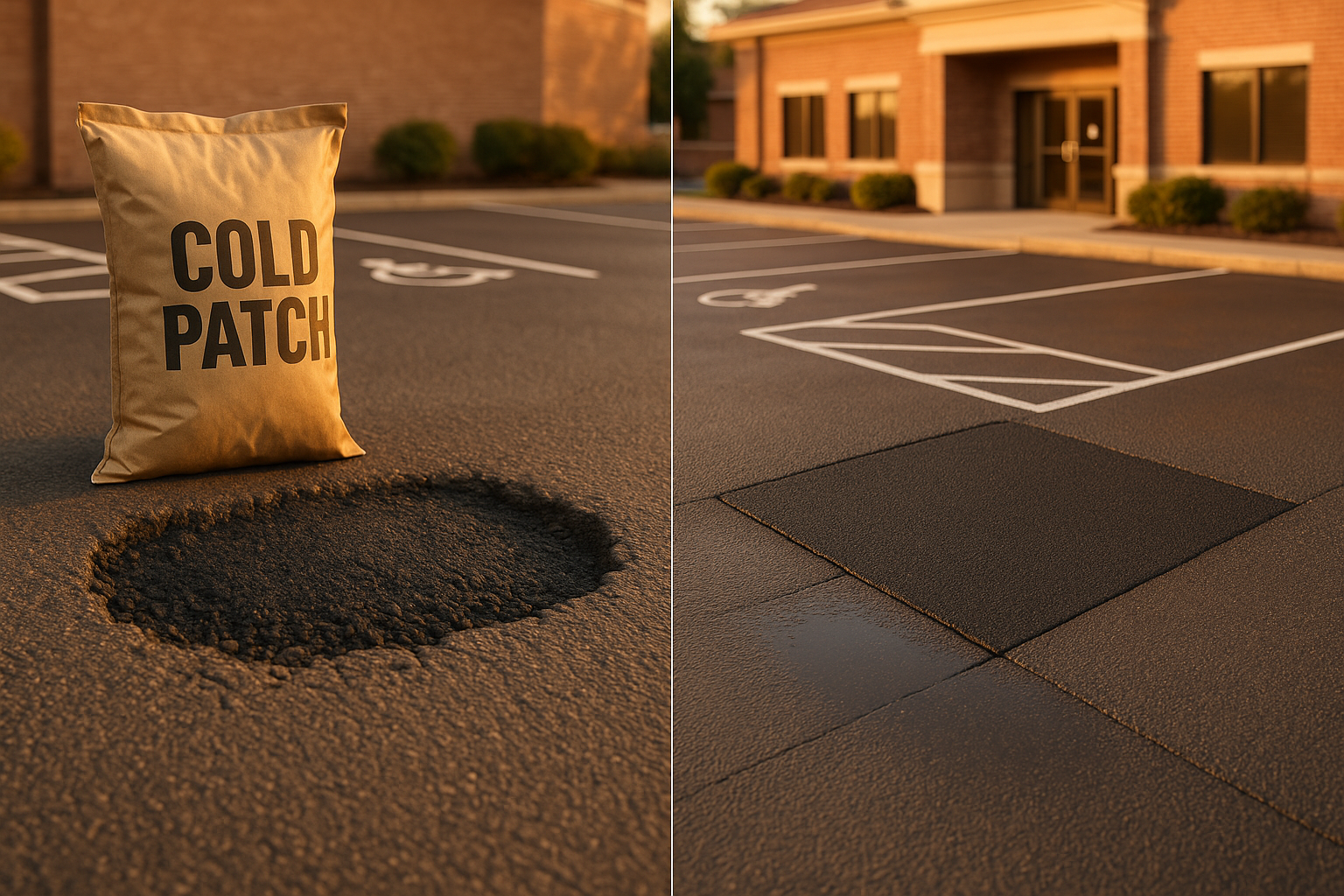
Cold patch is what you grab when it’s 20 degrees out and there’s a crater in the drive lane. It’s a pre-mixed asphalt blend that stays workable even when it’s freezing. No heating, no fuss—you dump it, tamp it, and hope it holds. It’s a temporary pothole repair, pure and simple. The stuff is designed to plug a hole fast so nobody trips or pops a tire. In a Midwest winter, that’s a lifesaver.
Hot mix asphalt, on the other hand, is the real deal. It’s produced at an asphalt plant, loaded into trucks at 300°F, and compacted while it’s still hot. Think of it as a permanent patch—done right, it bonds to the old pavement and holds up for years under snowplows, rain, and heavy traffic. Around Indianapolis, hot mix plants often shut down or run limited hours from late fall through early spring, so timing your project is everything.
Why the Cold Patch Pothole Repair Route Makes Sense Right Now
In a place like Indiana, pothole season is basically November through April. Freeze-thaw cycles push water into cracks, it expands when frozen, and the asphalt breaks apart. Add in snowplow blades and deicing salts, and your lot’s edges start to ravel like an old sweater. During those months, cold patch pothole repair is often the only game in town. It’s not perfect—it can get plowed out or track into buildings—but it keeps the property safe and your liability low while you wait for warmer weather.
Some folks ask, “Can I just ignore the holes until spring?” I wouldn’t. A pothole in an ADA path or a busy entrance is an accident waiting to happen. Cold patch may not last forever, but a little winter pothole repair Indianapolis-style can buy you the breathing room you need. The cost is low, and the alternative—a lawsuit or a damaged car—is a lot higher.
Getting a Permanent Fix: The Hot Mix Process
When asphalt plants around Central Indiana fire up again in April or May, that’s your cue to schedule the permanent work. A proper hot mix patch is more than just filling the hole. Here’s what a solid, long-lasting repair looks like:
- Saw-cut the edges square around the failure so the new asphalt can key in tightly.
- Excavate down to a sound base. In our clay-heavy subgrades, you often need to dig deeper and stabilize the stone base to keep the patch from sinking.
- Apply a tack coat—that sticky black glue—so the new asphalt bonds to the old.
- Place hot mix in 2–3-inch lifts and compact each one. You want it dense, not spongy.
- Seal the joints to keep water out, then let it cool before you run traffic over it.
That kind of permanent asphalt patch might cost more upfront, but you’re not chasing it every few months. And once it’s down, you can finally restripe without worrying that the paint will crack as the patch settles.
Don’t Forget the Striping and Drainage
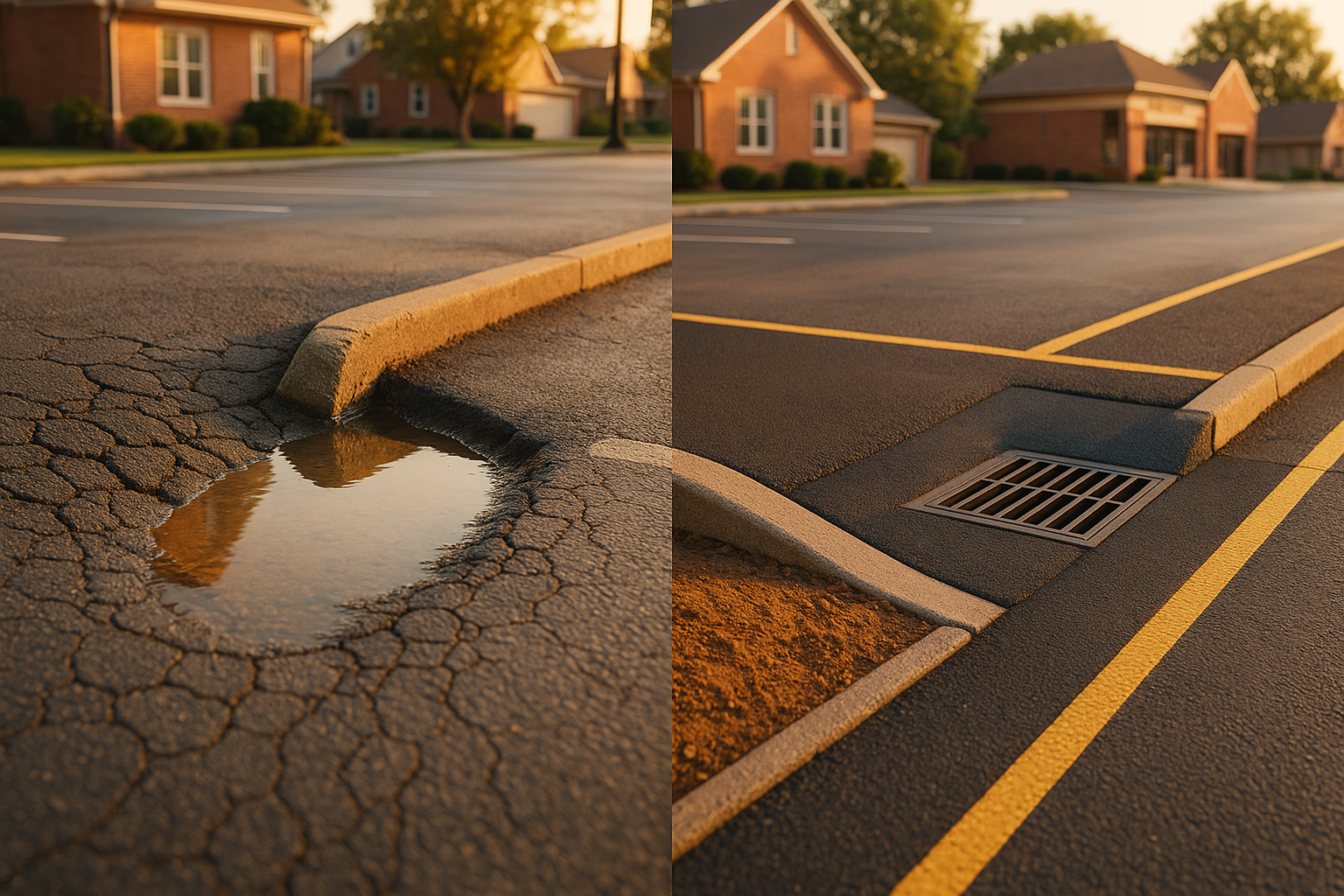
A finished patch isn’t really done until the parking lot lines are back in place and water flows where it should. We’ve seen lots where a nice hot mix patch created a little birdbath because the grade wasn’t matched—standing water will eat through any repair faster than you can say “sealcoat.” Always check that the surface sheds water toward a drain inlet or curb line.
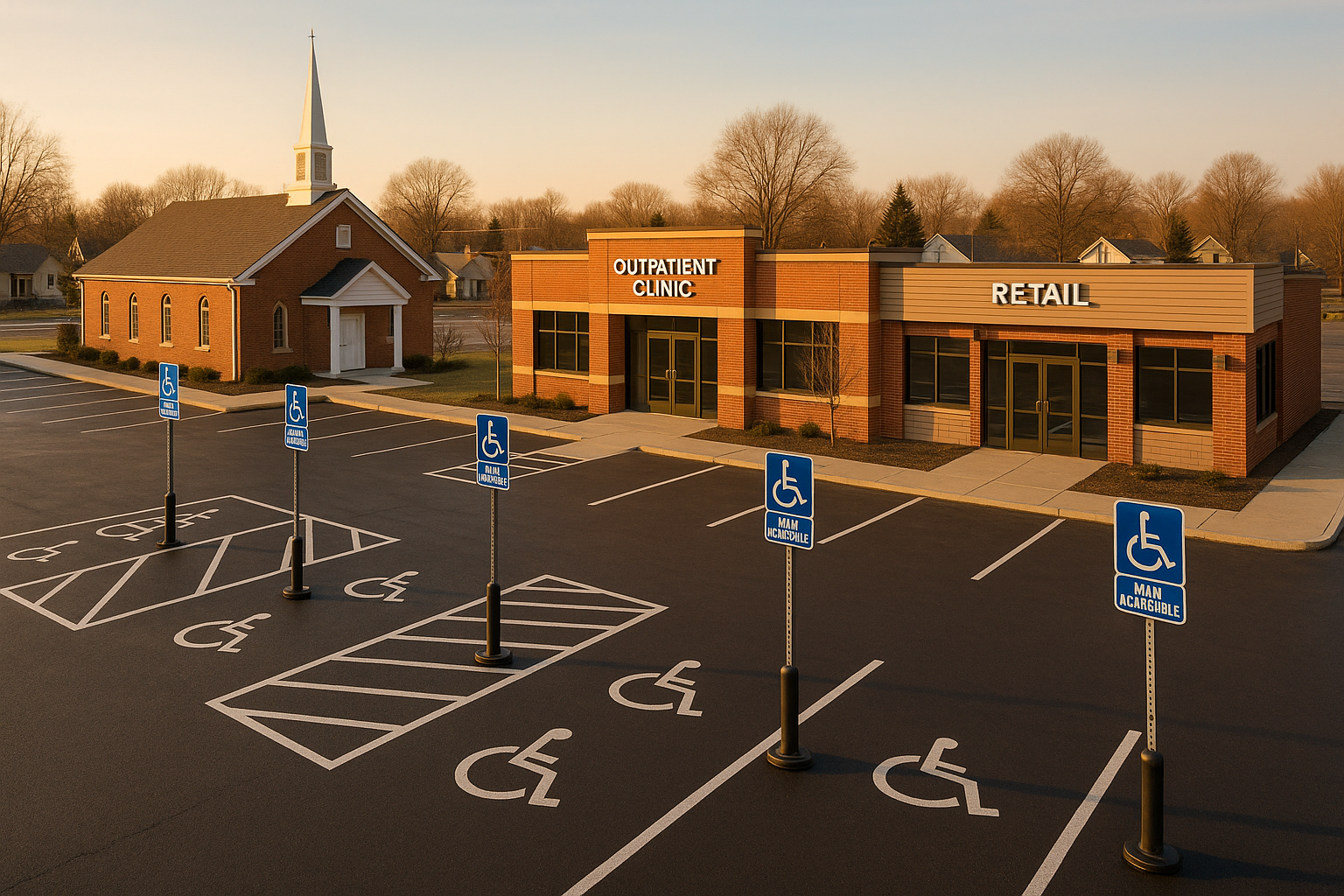
Striping gets tricky if you jump the gun. Hot mix needs to cure—usually a day or two, depending on the weather—before you paint over it. Restriping after repairs keeps your lot from looking like a crazy quilt and makes sure ADA stalls and fire lanes are compliant. A good parking lot maintenance plan sequences the work: patch and base fixes first, then crack seal, sealcoating, and finally layout and restriping. Skip a step, and you’ll have a mess that confuses drivers and costs you more in the long run.
Let’s Map Out Your Lot’s Needs
Every property is different. A busy retail lot in Greenwood might need phased repairs to keep customer parking open. An apartment community in Noblesville can tolerate a few days of planned closures if you give tenants a heads-up. What matters is having a clear, line-item scope that spells out which holes get cold patch now and which get permanent hot mix once the plants are running.
We’ve worked on church lots in Westfield, medical offices in Carmel, and HOA properties all over Indianapolis. The pattern is always the same: start with a walkthrough, flag the hazards, talk about your schedule, and pick the right fix for the right spot. Cold patch vs hot mix asphalt isn’t about one being better than the other—it’s about knowing when each tool fits the job.
If you’re staring at potholes and just want a straight answer (and a plan that won’t break your budget), let’s talk. We’ll walk your lot, show you what’s urgent, and map out a timeline that keeps your property safe and looking sharp. Request a site walk and quote here.
Ready for a free lot assessment?
We walk the lot, photograph the problems, and hand you a written plan — no pressure, no obligation.