Just last spring, a manager at a small medical office in Greenwood called us in a panic. The winter had left her lot looking like a roadmap of cracks and potholes. She wasn't sure if she needed a simple fill, some patching, or the whole thing torn out. Sound familiar? If you're staring at your parking lot right now wondering the same thing, you're in good company. The big question—crack filling vs patching—stumps a lot of property folks around Indianapolis.
What’s the Difference? Crack Filling, Patching, and Repaving
First off, let’s get clear on terms. Crack filling (or sealing) is for those long, skinny cracks that haven’t spread into a web. Think hairline to about a half-inch wide. That’s usually surface-level. We rout ‘em, clean ‘em, and fill with a hot-pour rubberized sealant that flexes with the pavement.
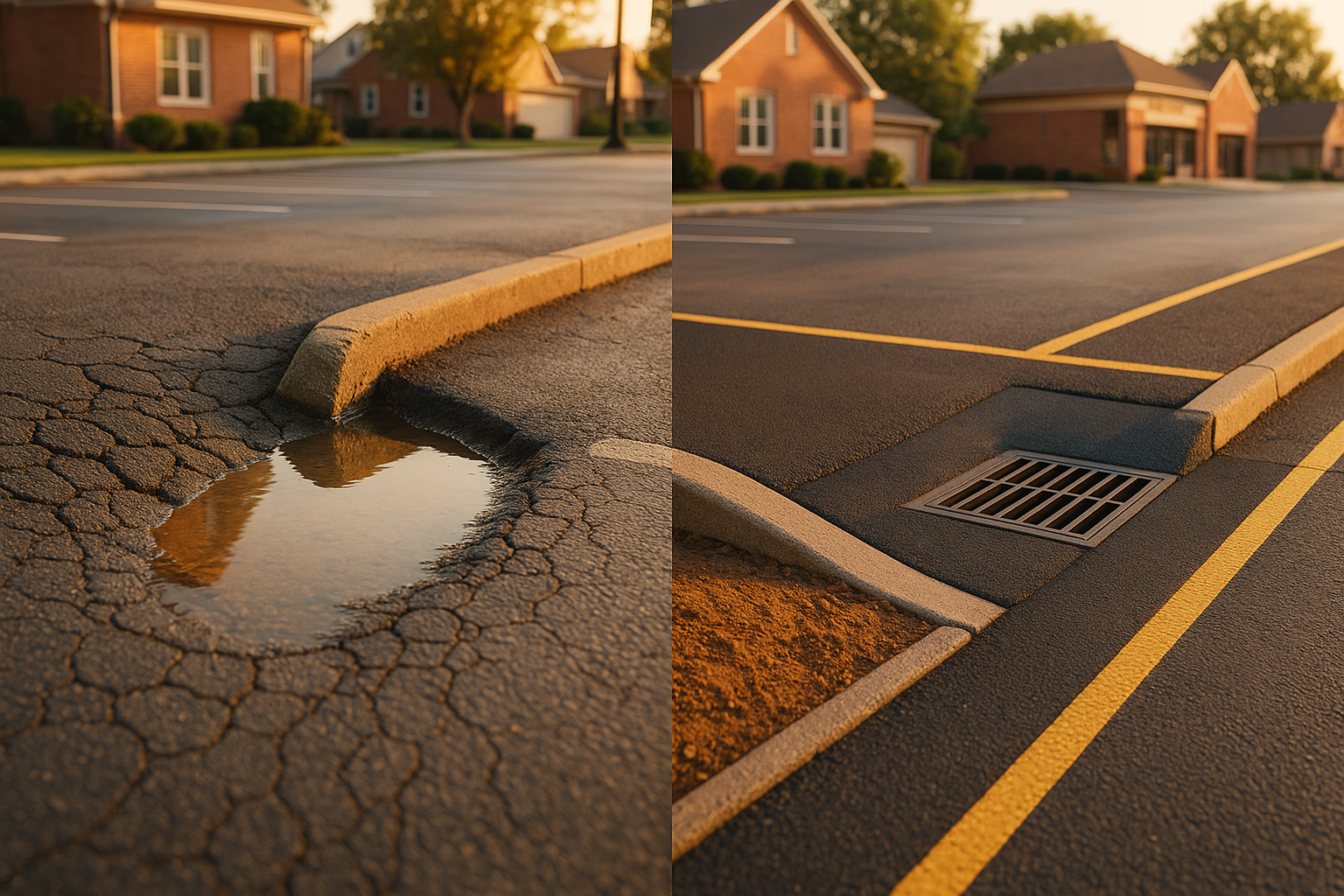
Patching is when the asphalt has failed—chunks missing, potholes, or that alligator-skin cracking. You’re cutting out the bad section and replacing it. There’s different types: a temporary cold patch (think bagged stuff from the hardware store—not our go-to), a saw-cut patch where you square up the edges and use hot mix, or infrared patching that blends old and new. That’s structural.
Repaving? That’s when you’ve got so many patches or widespread distress that it’s better to mill off the top and lay down a fresh surface, or a full-depth rebuild if the base is shot. But we’ll save that for the “is it that bad” conversation.
How to Read Your Lot: Alligator Cracks, Wide Joints, and Potholes
Here’s where the crack filling vs patching decision gets real. I walked a church lot in Fishers last fall—the board was convinced they just needed some crack filling and a fresh coat of sealcoat. But up by the main entrance, that tight crack pattern looked exactly like an alligator’s back. And when we probed it, the base was spongy. That’s base failure, and no amount of caulk fixes a shifting subgrade. They needed saw-cut patches in six spots. Once they saw the water seeping down, it clicked.
So, how do you know? Here’s a simple checklist we use:
- Width: Under a quarter-inch? Crack fill. Over a half-inch? Leaning toward a patch, especially if it’s widening.
- Pattern: One straight crack? Fill it. Branching, interconnected cracks? That’s fatigue—often from years of freeze–thaw or overloaded pavement. You’re probably patching.
- Edge condition: Are the crack edges crumbling or raveling? That means the asphalt is breaking apart. Fill alone won’t hold; you need to remove the loose stuff and patch.
- Moisture: Puddling or pumping water up? The base is saturated—and that means the structure is compromised. Patch or possibly dig deeper.
If you’re unsure, we see a lot of Indianapolis lots where a mix is the answer: fill the tight, linear cracks and patch the alligator areas. It’s not overkill—it’s saving you from doing it again next spring.
Why Our Indiana Weather Makes These Repairs Tricky
Freeze–thaw cycles are the enemy. Central Indiana can go from 25 to 45 and back in a week. Water gets into cracks at night, freezes, expands, and widens the gap. Repeat that a few dozen times and little cracks turn into potholes. Add deicing salt—which corrodes the asphalt edges and keeps moisture active longer—and you’ve got a recipe for faster decay. I’ve seen lots in Avon right along a busy retail strip where salt spray from the road accelerates raveling near the entrance. It’s brutal.
That’s why timing matters. We aim for spring or early fall—dry pavement, moderate temps. You can’t fill or patch in a downpour, and the sealant won’t bond if it’s freezing. If you schedule in summer, just know that after the repair you might be waiting for the right window to stripe, but we’ll plan that.
Getting Your Striping Right After the Fix
Here’s a common mistake: striping first, then patching. The new lines end up ragged where the patch edges show through, or the stripe material can’t adhere right to a fresh, oily patch. Do the heavy lifting first—crack fills and patches need to cure. Hot-pour sealant sets in about 30 minutes, but we usually give it a day before striping. For patches, especially saw-cut with hot mix, you want to wait several days for the asphalt to oxidize so the paint sticks tight. Otherwise, you’ll see those patch seams telegraphing through your paint a month later, and that looks sloppy.
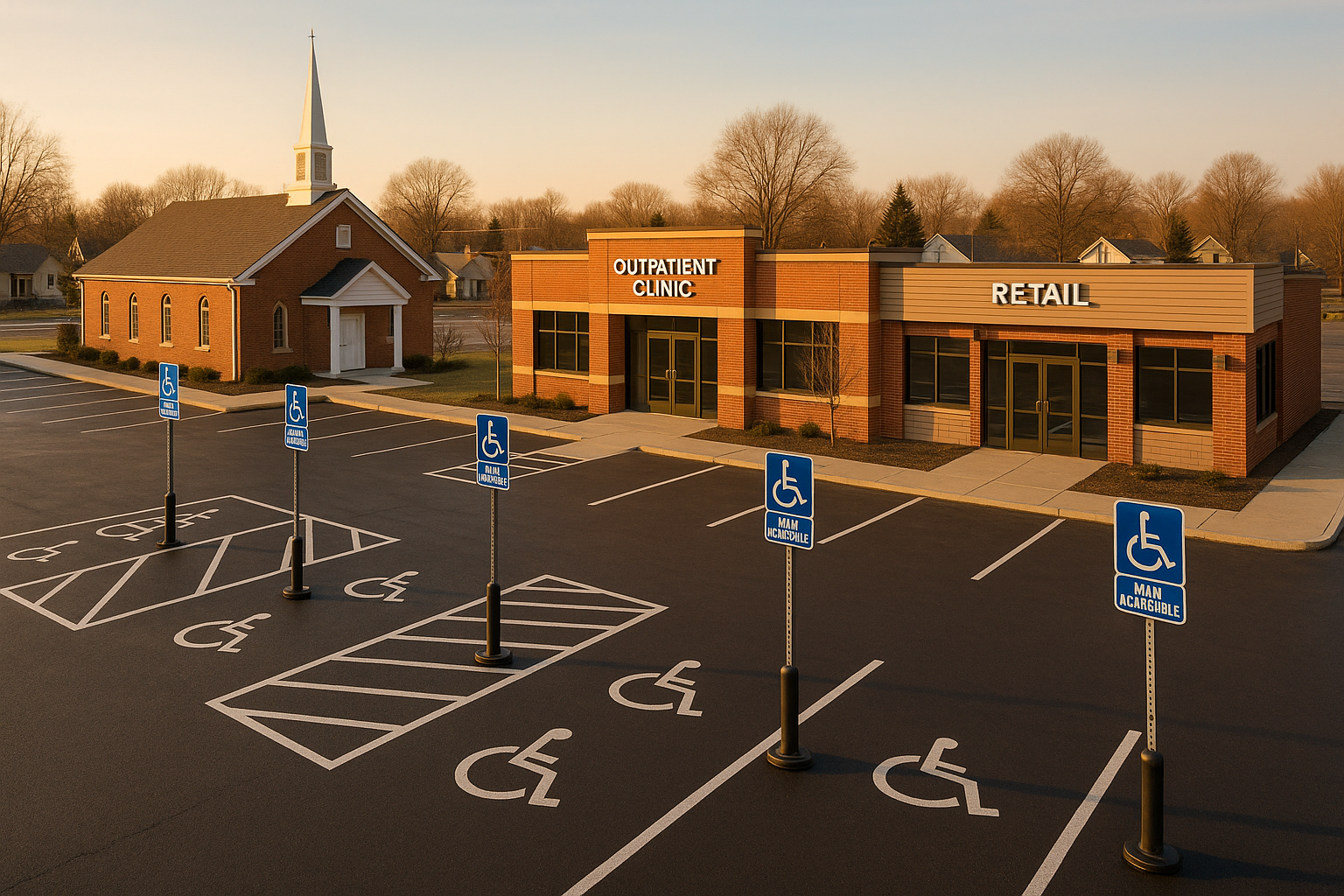
And while you’re restriping, it’s worth checking ADA compliance. A lot of older lots in Carmel and Zionsville got grandfathered in, but if you’re already re-striping after a major patch job, adding the right number of van-accessible stalls and updating signage can keep you out of trouble. (We’ve got a whole piece on that at [/blog/ada-parking-requirements-indiana/] if you want details.)
Minimizing Downtime for Your Business or Congregation
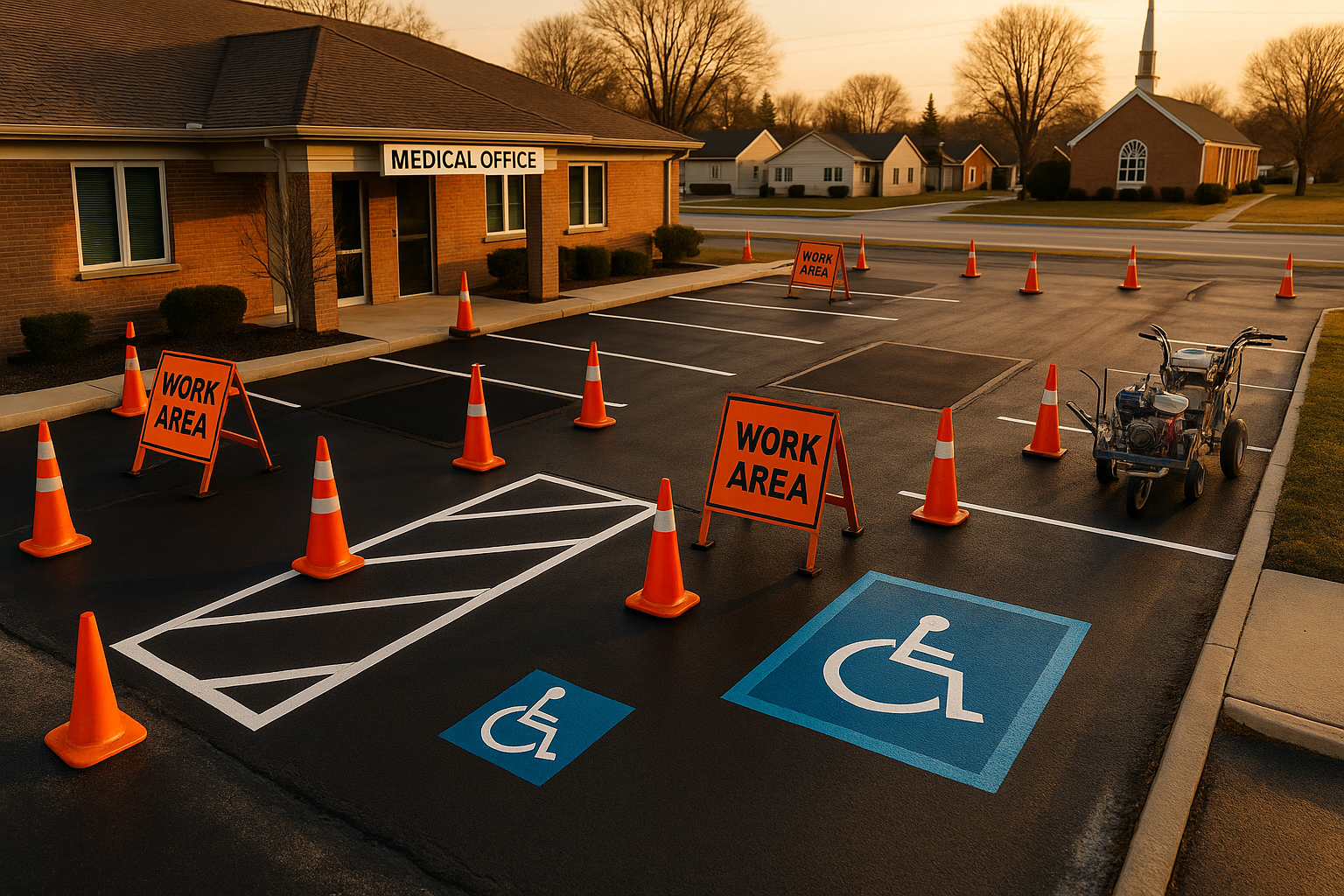
I get it—no one wants a parking lot out of commission during business hours. That’s why we do a lot of phased work: fix the back section on Saturday, stripe it Sunday morning before services, then move to the front the next weekend. Or we come in at night. Medical offices in Greenwood often schedule us for after-hours. We bring cones, signs, and flaggers as needed, so your patients or customers can still get in and out safely. The key is planning ahead and communicating the schedule, so there are no surprises.
How Much Does All This Cost?
It depends on square footage, but crack filling is usually priced per linear foot. Patching is per square foot and can range from a simple infrared patch to a deep saw-cut repair. Preventative crack filling now is way cheaper than patching later—and patching is cheaper than repaving. You can spend a few hundred dollars filling cracks on a small lot and avoid a $5,000 patch bill down the road. We always try to give our Indianapolis clients a realistic maintenance plan that spreads out the costs.
So, What’s Your Next Step?
If you’re still scratching your head over crack filling vs patching, we’d rather you not guess. PavementPros does free walk-throughs all over the Indy metro—from Brownsburg to Plainfield, Noblesville to Greenwood. We’ll mark up your lot, give you a written plan with options, and help you schedule the work so it doesn’t disrupt your world. Hit the link [/blog/sealcoating-vs-doing-nothing/] if you want to read more about sealcoating and when it makes sense, or just request your no-cost site visit right here: [/#quote]. We’ll get you sorted before the next freeze-thaw cycle does its thing.
Ready for a free lot assessment?
We walk the lot, photograph the problems, and hand you a written plan — no pressure, no obligation.