A few years back, a buddy managing a medical office in Carmel almost lost a tenant because the parking lot got so dark after sunset. A patient tripped on a curb near a puddle, and the next week the facility got a letter from an attorney. The lights were old, the poles were rusted, and nobody had looked at parking lot lighting requirements in ages. That's the kind of thing that keeps property managers up at night.
So let's talk about parking lot lighting requirements and why they matter more than you think. It's not just about code. It's about liability, tenant experience, and avoiding angry neighbors.
What Indianapolis Actually Requires for Parking Lot Lights
If you own or manage a commercial property in Indianapolis, you don't need a stack of code books to figure out the basics. The Indianapolis parking lot lighting code is part of Marion County's Unified Development Ordinance. It sets a few clear rules: keep light from spilling onto neighboring properties, use full cutoff fixtures so you don't blind drivers, and stay under certain parking lot pole height caps depending on your zoning. If you're near a residential edge like Broad Ripple or Irvington, expect tighter light trespass limits and lower maximum pole heights. Some towns like Carmel, Fishers, and Zionsville have their own twists, so don't assume Indy rules carry over.
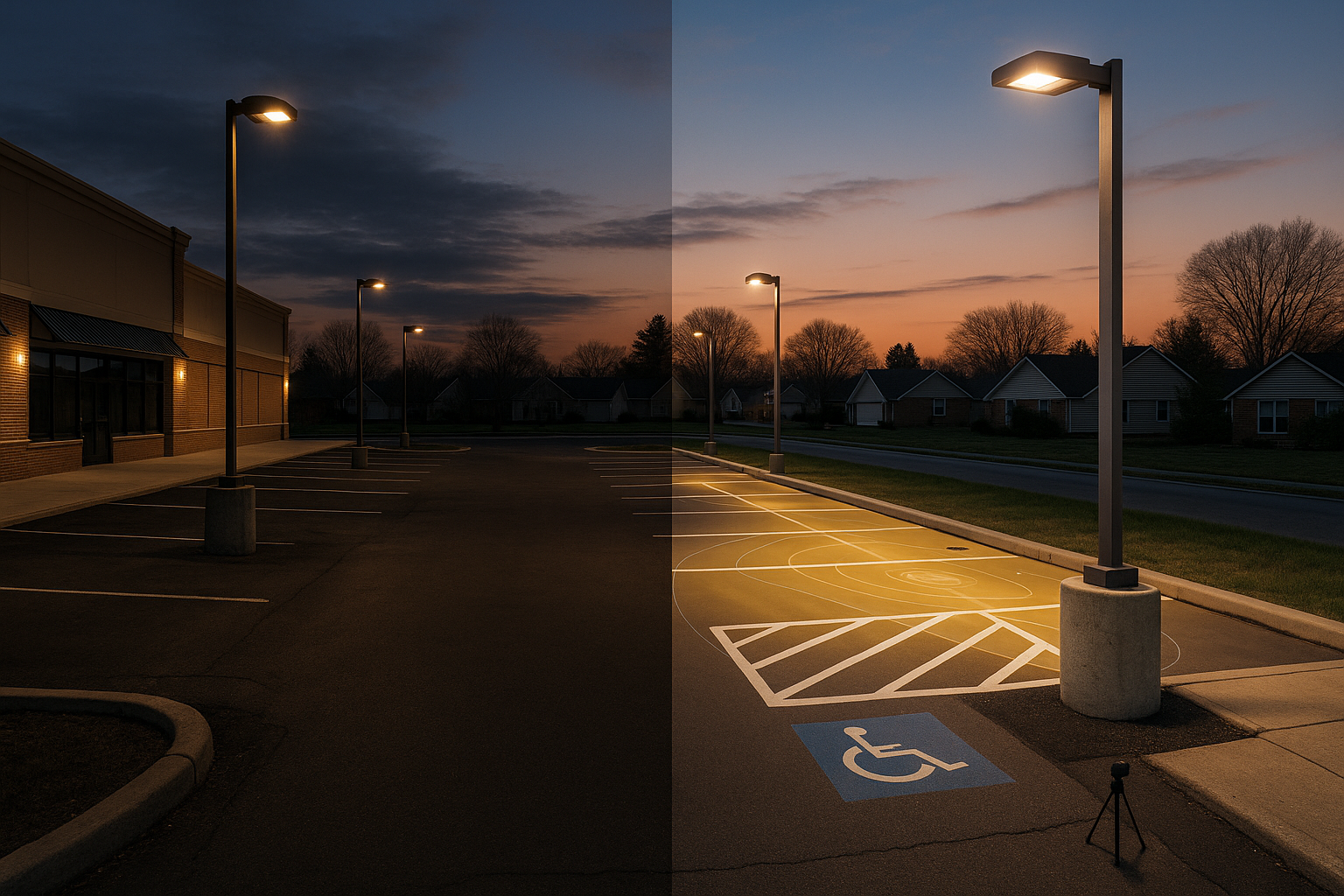
Most reviewers ask for a photometric plan for Indianapolis projects. That's just a fancy map showing where the light lands, how bright it gets, and how even the spread is. The IES parking lot lighting recommendations give target ranges for average illuminance and uniformity. For general parking, you usually want around 1 to 2 foot-candles average, with higher levels at entrances, crosswalks, and building entries. Minimum levels on walkways? Around 0.5 foot-candles, but ADA compliant exterior lighting for accessible routes and loading areas need a tighter, more uniform pattern. I've seen plans get bounced back because the designer forgot to include a BUG rating from TM-15, which measures backlight, uplight, and glare. Pick fixtures with low BUG numbers and you'll keep neighbors happy.
LED Lighting and Controls: Best Practices for Indiana Weather
Full cutoff LED parking lot lights are pretty much the standard now. They throw light down where you need it, not up into the sky or sideways into someone's living room. Color temperature matters too. Stick with 3000K to 4000K. Anything higher gets harsh and blue, and it actually reduces your night vision. I've heard property managers in Greenwood and Brownsburg say warmer LEDs made their lots feel safer without being annoyingly bright.
Indiana freeze-thaw cycles and de-icing salts are brutal on poles and wiring. If you're doing a parking lot lighting retrofit, don't just swap heads. Check the pole bases. I've seen bases cracked and shifting because they were poured too close to the curb and got hit by plows. Asphalt pole base repair is often needed before you set new anchors. Corrosion-resistant hardware and sealed handholes keep water out. Then plan your parking lot conduit and wiring. Old lots in Avon and Plainfield often have shallow, undocumented conduits. Call 811 before you dig, and be ready to replace a section or two.
Lighting controls photocell and dimming are no longer optional for smart budgets. Dusk-to-dawn photocells with after-hours dimming can cut your energy bill by 30% or more. AES Indiana lighting rebates sometimes help pay for the upgrade, but you need to design around their requirements from the start. A photocell that dims to 50% at midnight keeps the lot safe without wasting power. And if you need a permit, the City of Indianapolis permitting BNS office usually wants a photometric plan and fixture cut sheets in the application. If you're trenching or boring in the public right-of-way, you'll also need a DPW right-of-way permit. That's a separate headache, but a local contractor can handle it.
Coordinating Lighting with Pavement and Maintenance
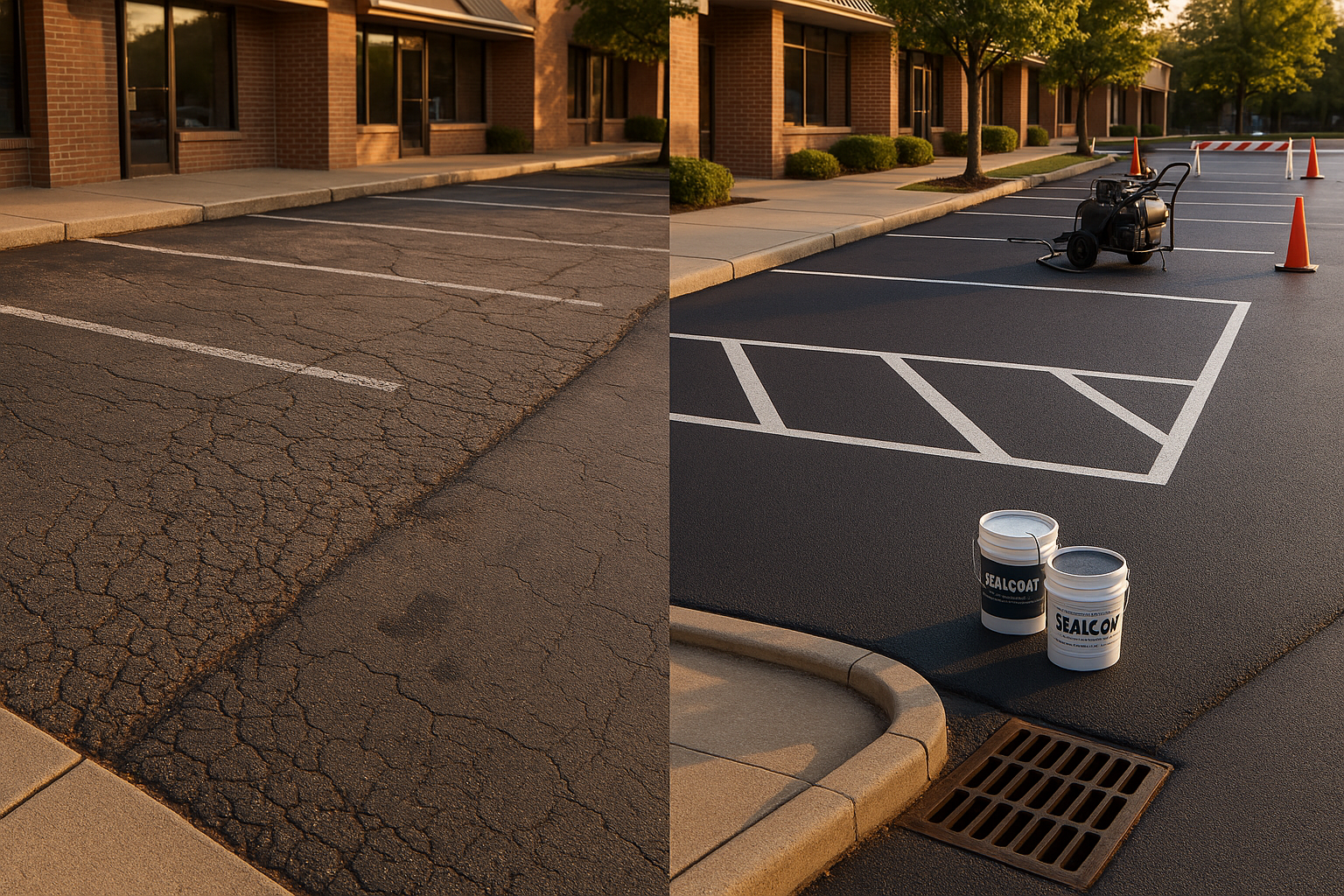
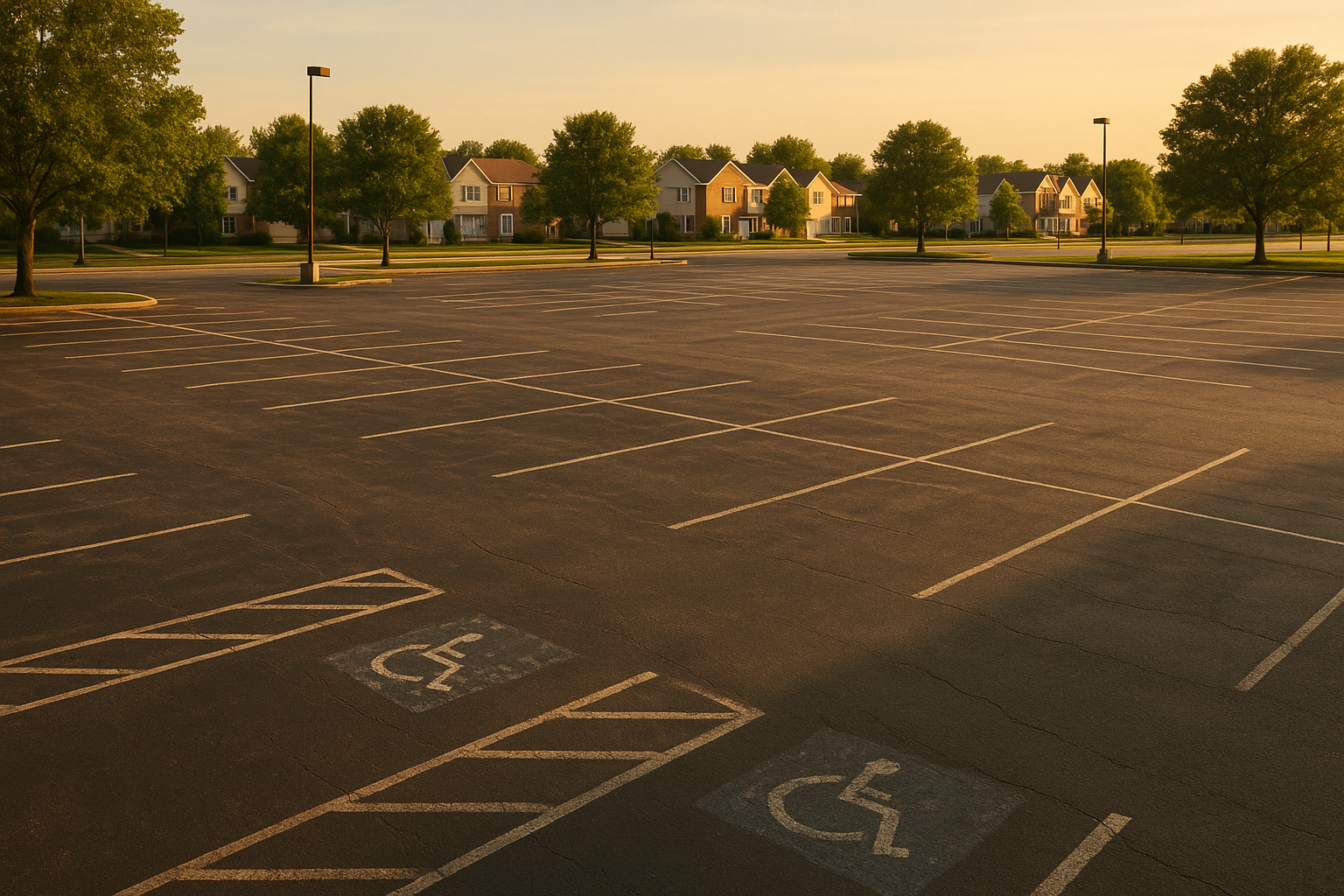
The biggest mistake I see is doing lighting and paving as two separate projects. If you're planning to sealcoat or re-stripe, get the lighting plan done first. You don't want to patch a conduit trench after you just paid for fresh sealcoat. Check out our article on catch basin repair and parking lot drainage because pole bases too close to swales or drains will settle and crack. Parking lot safety lighting should align with your striping plan. If you repaint accessible spaces, make sure the ADA compliant exterior lighting actually covers the walkway from those spaces to the door. We've also written about sidewalk ADA ramp repair in Indianapolis, because a bright lot doesn't help if someone falls on a broken ramp.
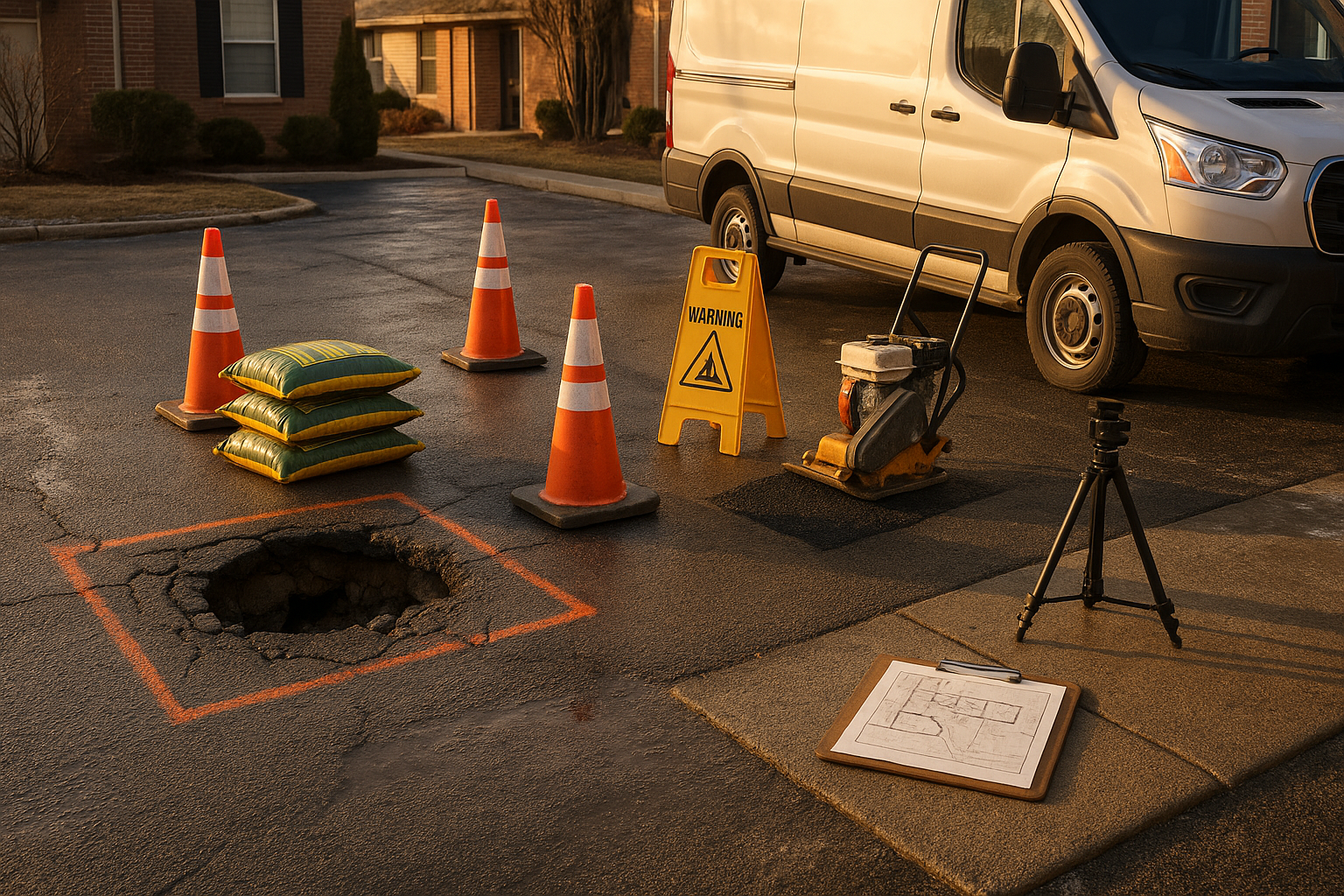
When we assess a property, we look at the whole picture: pavement condition, drainage, curb lines, pole locations, and even the loading dock apron if you have one. Loading areas need brighter, more uniform light for truck drivers and staff. Our blog on loading dock apron concrete repair explains why that area gets abused. And if you're managing a commercial site lighting Indianapolis project, you want one contractor who can pour a new pole base, run the conduit, patch the asphalt, and then stripe around it. That's what we do at PavementPros.
Don't Let Neighbor Complaints Sink Your Project
In places like Westfield and Noblesville, where subdivisions sit right behind strip centers, light trespass is the number one complaint. The fix is simple: full cutoff fixtures, aim them inboard, and lower the pole height near the property line. You do not have to sacrifice safety. I've seen a Fishers church parking lot cut its energy bill and stop getting angry calls from neighbors just by swapping to shielded LEDs and adding a midnight dimming schedule. If you have a perimeter area, use a shield or a lower wattage head. And remember that brightness isn't the same thing as safety. Uniformity matters more than raw foot-candles.
What a Project Actually Looks Like
When you call PavementPros for a parking lot maintenance Indianapolis project, here's the flow. We walk the site at dusk, take light level readings, and map the existing poles and pavement issues. Then we produce a photometric model, finalize the fixture schedule, and handle the BNS permit and DPW coordination if needed. We'll schedule the electrical and paving work in phases so you don't have to close the whole lot. After installation, we do a punch list, provide as-builts, and document the light levels for your files. No surprises, no finger pointing.
If you're tired of guessing about parking lot lighting requirements and want a clear plan that ties into your paving work, give us a shout. We're based here in Indianapolis and we know the local codes, the weather, and the shortcuts that actually work. Book an on-site lighting and pavement safety assessment and we'll put together a photometric plan with a code-aligned scope of work. Get a quote here.
Ready for a free lot assessment?
We walk the lot, photograph the problems, and hand you a written plan — no pressure, no obligation.