Last spring I got a call from a property manager in Carmel. She had three striping bids on her desk and couldn’t make heads or tails of them. One was a single number scribbled on a napkin—no joke. Another listed everything in square feet when she was expecting stall counts. The third looked like a government contract, half the line items she didn’t even recognize. She was pulling her hair out, and the tenants were already complaining about faded arrows and puddles in the fire lane. Sound familiar? Bidding parking lot maintenance doesn’t have to be that painful. With the right homework and a clear scope, you can get clean bids, avoid surprise change orders, and keep your lot safe and sharp all year.
Start with what you actually need
Before you even pick up the phone, grab a clipboard and walk the lot. Count the stalls—total, ADA, and van-accessible. Note the arrows, stop bars, crosswalks, fire lanes, and any specialty stencils like “RESERVED” or numbering. Snap some photos, and sketch a simple site map. You don’t need an architect’s drawing, just something that shows where everything lives. This little inventory is gold. It keeps bidders from guessing and gives you a fighting chance at apples-to-apples numbers later.
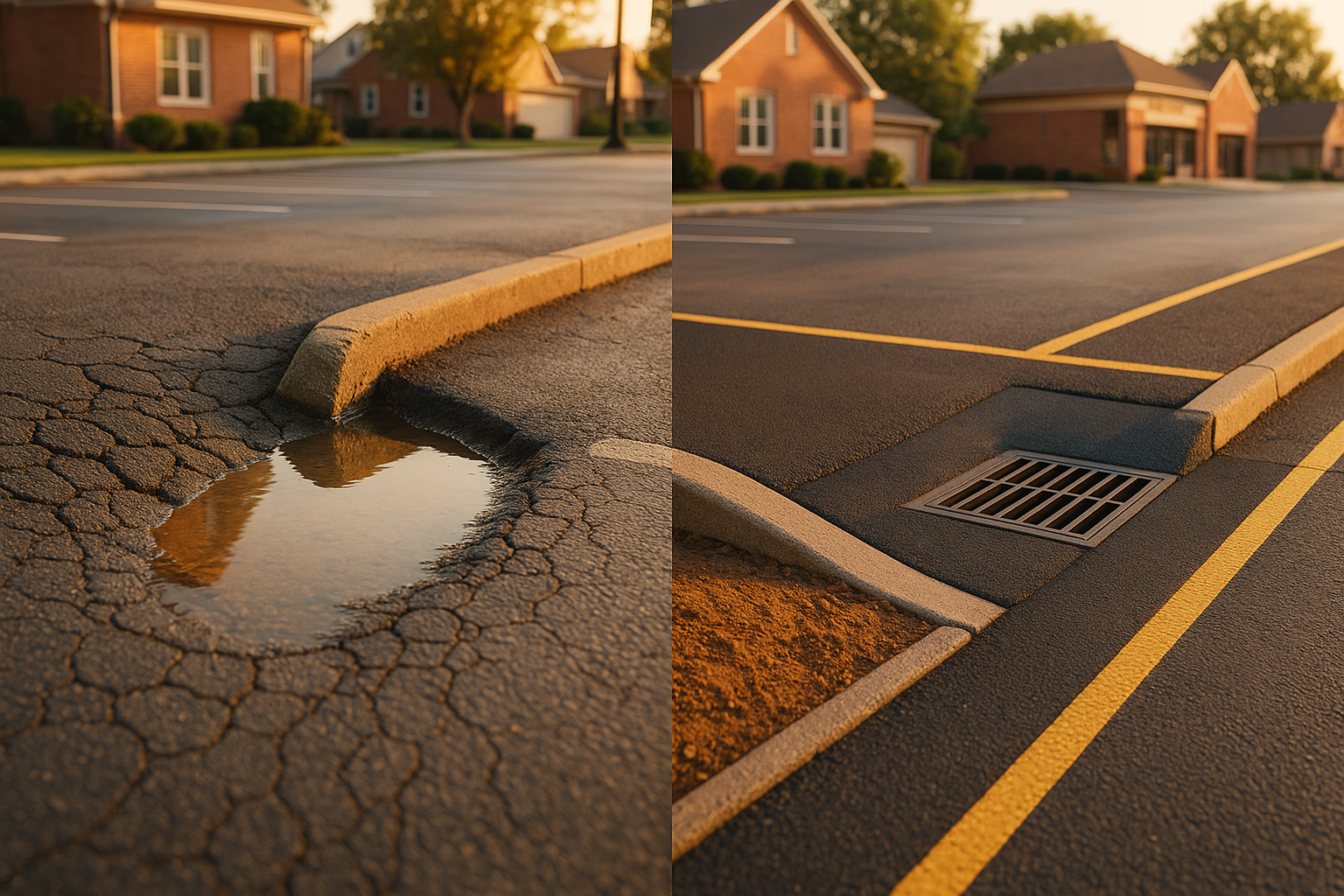
Also, take a hard look at the pavement. Is there old sealcoat peeling? Big cracks or patches? If the surface is tired, fresh paint might not stick or last, and you’ll be back to square one in six months. I’ve seen lots in Fishers where the striping looked great for about four weeks—then a wet spring and a few snowplow passes turned it into a ghost town. Pairing sealcoating and striping at the same time often makes sense, but timing it right is tricky. (More on that in our sealcoating myths post.)
Building a scope that gets you comparable bids
Here’s the secret to ending the apples-to-oranges game: define everything in consistent units. Most contractors in Indy prefer lineal feet (LF) for lines, each (EA) for symbols and stencils, and square feet (SF) for big painted areas like crosswalks or hatching. So ask for unit pricing that way. Include separate line items for mobilization, traffic control, and any layout changes. That way, when you get three bids back, you can line them up side by side and see exactly where the differences are.
Be specific about materials and standards too. In central Indiana, a good waterborne acrylic traffic paint with fast-dry properties works great for most lots from April through October. If you’re stuck working a job in early November or have a lot that needs to reopen fast, you might spec a low-temp solvent paint. Just make sure it’s commercial-grade and they lay it down at the right thickness. For areas that need night visibility—like medical office parking lots near St. Vincent or Eskenazi—require glass beads for reflectivity. Spell out line width (4 inches is standard for stalls, but you might want 6 inches for stop bars) and ADA symbol dimensions. Clear specs = clear bids.
The compliance stuff that can trip you up
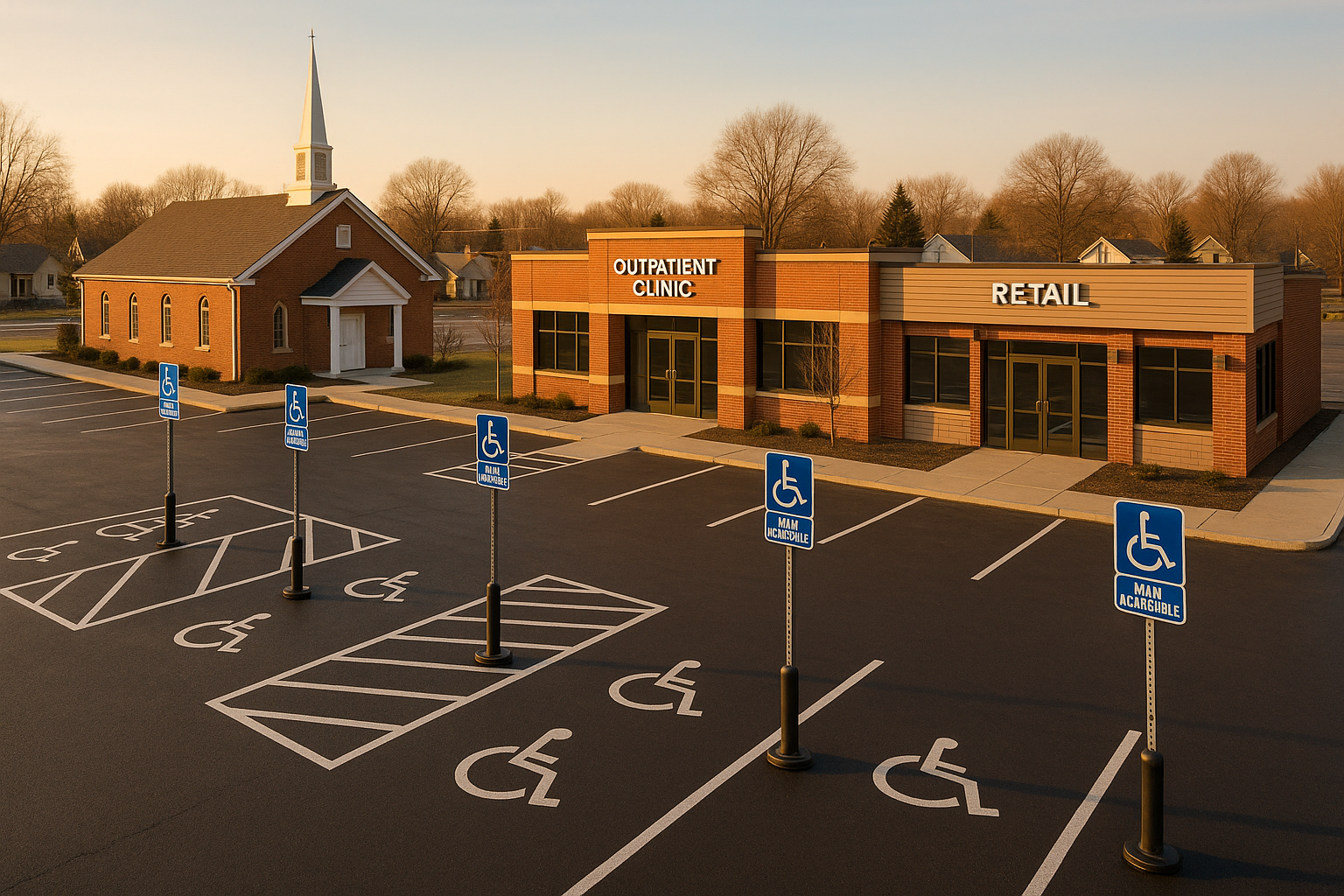
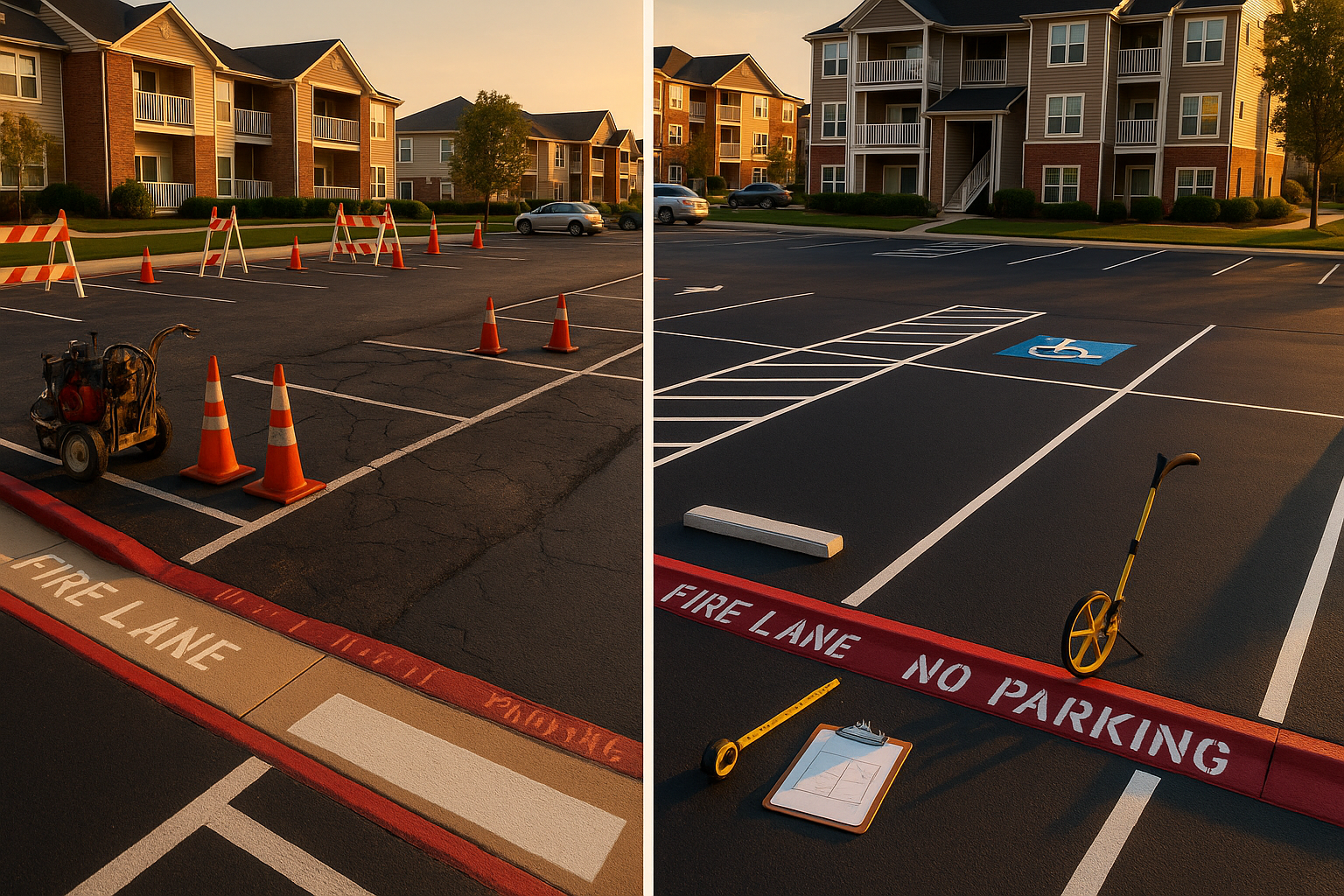
ADA and fire lane markings aren’t suggestions, they’re requirements. In Indianapolis, local fire marshals and code enforcement are paying attention, and fines sting. A good bid includes correct ADA stall counts, access aisles, van-accessible signage, and clearly marked fire lanes—often with red curb paint and stenciled lettering. If your lot layout is old, you might even need a slight redesign to meet current counts or improve flow. We hear from property managers all the time who discovered too few ADA spaces only after a tenant complaint. Don’t let that be you. If you’re not sure what your lot needs, a quick read of our fire lane striping requirements guide can help you get oriented before bidding starts.
Scheduling without making everyone hate you
“We can’t shut down the lot during business hours” is probably the #1 thing we hear. We get it. That’s why you need a traffic control plan spelled out in the bid—barricades, coning, signage, and a phase map showing how sections will be worked while others stay open. Look for contractors willing to work nights or weekends. Some multi-tenant retail spots near Castleton or Greenwood Park Mall practically require overnight work because daytime traffic never stops. Be realistic about weather, too. Indianapolis springs can be damp, and humidity slows paint cure times. A good bid will mention temperature thresholds (usually 50°F and rising) and include a rain contingency. If a contractor shrugs and says “we’ll figure it out,” that’s a red flag.
Comparing bids like a pro (not just on price)
Cheapest paint isn’t a win. I’ve seen lots in Plainfield where the stripe faded to nothing by Thanksgiving because someone used bargain latex instead of traffic-grade acrylic. When you line up bids, look beyond the bottom line. Do they show unit prices for every item? Are they including a pre-stripe layout if you’re making changes? Are they willing to share material data sheets and references from similar properties? A real pro will be proud to show their work. Check their experience with property types like yours—apartment communities, medical offices, churches. Our apartment parking lot maintenance guide gives a peek at what those jobs often need. Also, ask about their clean-up habits: nothing sours a tenant relationship faster than paint overspray on cars or debris left in the lot.
A quick word on warranties and follow-ups
Around Indy, you can expect a typical restripe cycle of 12–24 months depending on traffic volume and how many snowplow blades scrape the lines each winter. A solid contractor warrants their work for at least a year against premature wear and adhesion failure. That doesn’t cover plow damage, though—so talk to your snow removal crew about keeping blades a hair off the asphalt. Also, if you’re planning to sealcoat in the future, coordinate the restripe right after so everything looks fresh together.
Ready to make life easier?
You don’t have to become a parking lot expert overnight. But walking the lot with someone who does this every day can save you a bundle of headaches. At PavementPros, we offer fixed-scope, line-item quotes based on a brief site walk and your specific needs. We’ll count stalls with you, check ADA and fire lane compliance, and lay out a phasing plan that keeps your tenants happy. Hit us up for a quick visit—it’s free and there’s zero pressure. Then you’ll have a clear, comparable bid you can actually use. Grab a time on our quote page and we’ll come see the lot.
Ready for a free lot assessment?
We walk the lot, photograph the problems, and hand you a written plan — no pressure, no obligation.