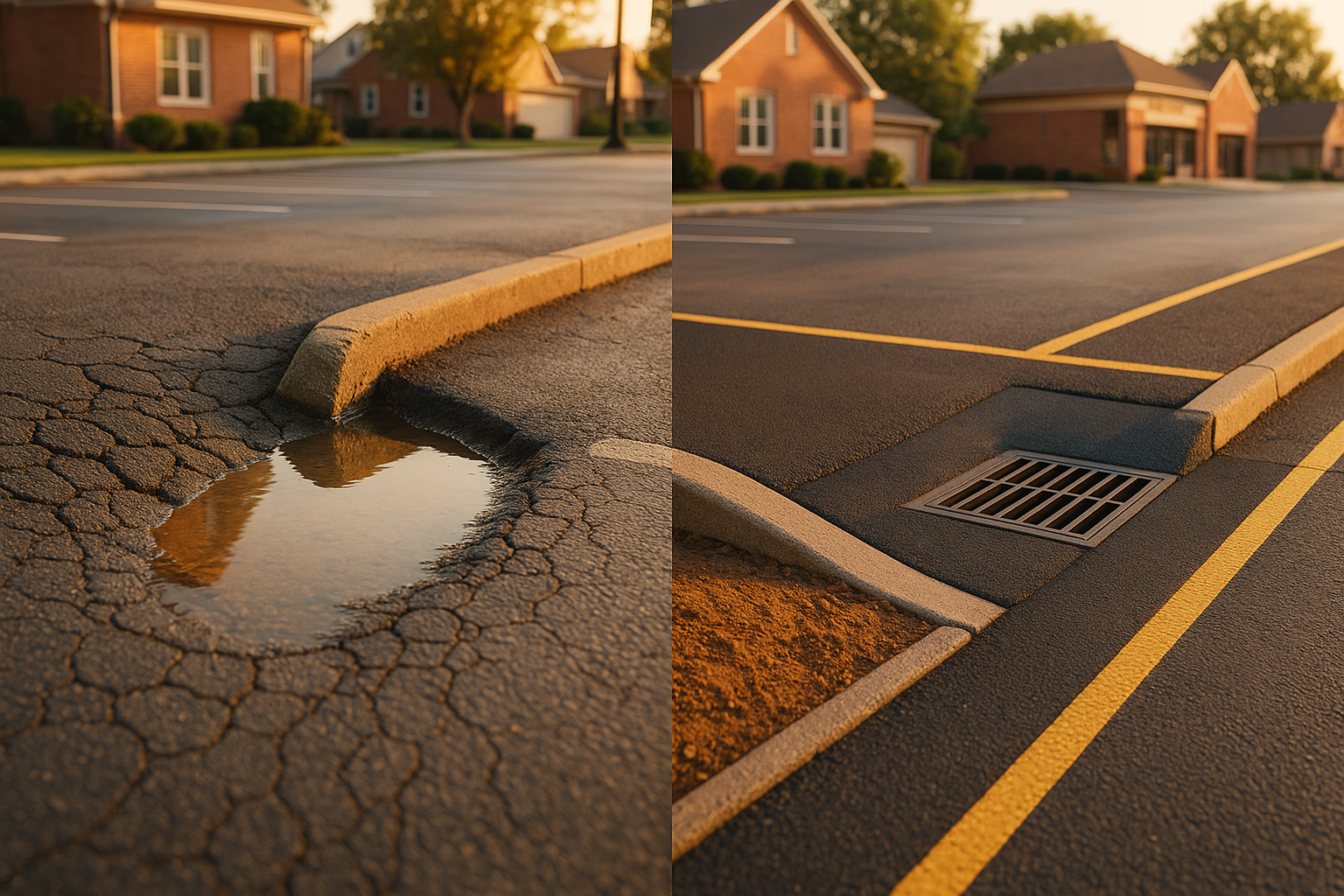
Dave manages a small retail plaza over in Castleton. He always figured sealcoating was one of those optional line items—something you do if you’ve got extra cash in the budget. So year after year, he put it off. The lot didn’t look great, but tenants weren’t complaining. Then last spring, after one too many freeze–thaw cycles and a winter of heavy plowing, the cracks spread like spider webs. By summer, he had potholes big enough to swallow a shopping cart. The fix? He had to resurface two-thirds of the lot. Cost him five times what sealcoating would have over the same stretch of years. Dave told me he still kicks himself when he writes the check. That’s the real cost of skipping sealcoating—it’s not just about looks.
The Real Price of Doing Nothing
Asphalt is like skin: it oxidizes in the sun, dries out, and starts to crack. Without a protective layer, water sneaks in. Then winter hits Indiana with its freeze–thaw swings, deicing salts, and plow blades scraping every inch. Water freezes, expands, and pops the pavement apart. Salt accelerates the breakdown. Before long, you’ve got alligator cracks, crumbling edges, and base failure. Sealcoating acts as a shield—it slows oxidation, fills surface pores, and blocks water and salt from penetrating. Skipping it might save you a few thousand dollars now, but you’ll pay many times that when the subgrade fails and you need a full-depth repair or resurfacing.
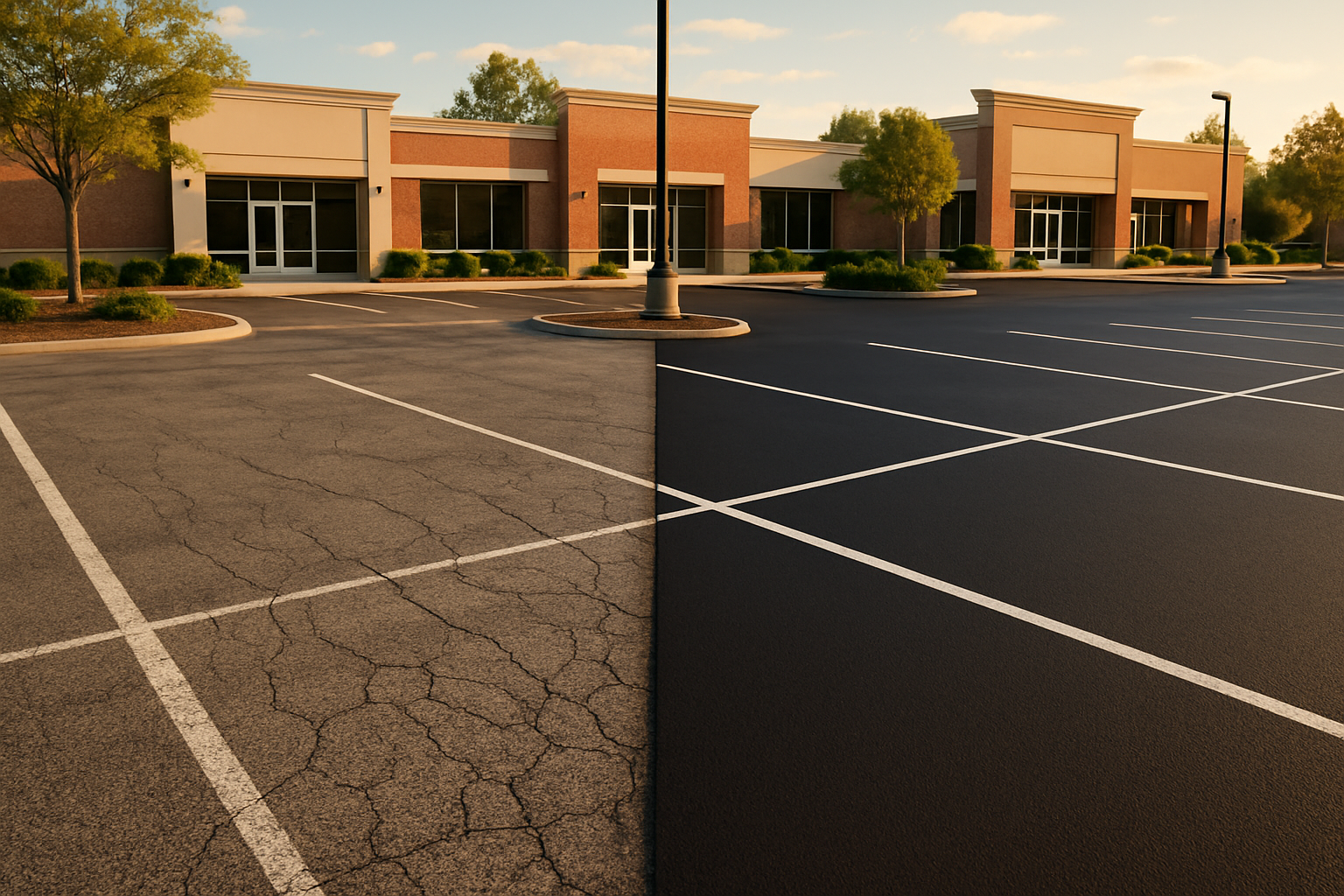
From a pure numbers standpoint, sealcoating and crack sealing every two or three years on a structurally sound lot can stretch the pavement life by a decade or more. Resurfacing costs $3–$7 per square foot. Sealcoating typically runs $0.15–$0.30 per square foot, depending on prep, materials, and striping. The math isn’t hard. But the real sealcoating worth it moment comes when you factor in curb appeal—tenants and customers notice a dark, clean lot with bright stripes. It says you care about the property. That matters for retail, churches, HOA communities, and any business where first impressions count.
So When Is Sealcoating Worth It?
Sealcoating shines when the pavement is still in decent shape. A few minor cracks here and there, maybe some faded color, but no major structural issues. If your lot has good drainage, no rutting, and the asphalt isn’t alligatored or sinking, then sealcoating is a smart investment. In Indianapolis, the freeze–thaw cycle and road salt abuse make the protective layer especially valuable. Add in the UV from our surprisingly hot summers, and you’ve got a perfect recipe for early surface wear.
But sealcoating isn’t a miracle cure. It won’t fix deep cracks, potholes, or base failures. Those need patching, crack sealing, or even resurfacing. I’ve seen property owners slap sealer over a crumbling lot and then get mad when it peels off in six months. The sealer only protects what’s already solid. If you’re seeing standing water, wide alligator cracks, or areas that sink under weight, don’t waste money on sealcoating—get those fixed first. That’s the real resurfacing vs sealcoating conversation.
What Goes Into a Proper Sealcoat Job?
The process matters as much as the decision to seal. We start with aggressive cleaning—blowers, sweepers, sometimes power washing to get rid of dirt, oil spots, and debris. Then we tackle crack sealing: routing and filling cracks so they don’t mirror through the new sealer. Oil spots get primed so the sealer bonds properly. After that, we cut in edges by hand before applying two thin coats of sealer—never one heavy one, which can skin over and crack. The first coat needs to dry before the second goes on. Only after the final cure do we restripe. That sequence—clean, seal cracks, prime, seal, cure, stripe—is what gives you a job that lasts. Cutting corners anywhere in that chain shortens the life and makes the whole thing a waste.
Materials: What’s That Black Stuff?
Most sealers fall into two camps: asphalt emulsion and coal tar. Coal tar’s been the go-to for decades—it’s tough, resists gas and oil, and gives a deep black finish. But some municipalities are pushing back on coal tar because of PAH concerns, so low-PAH or asphalt emulsion options are gaining ground. Emulsion tends to cure faster, is more user-friendly, and still offers solid protection, especially when mixed with polymers. We often recommend a high-solids asphalt emulsion with a sand additive for skid resistance—wet sealer can be slick, and sand gives it grit. That’s a big one for slip resistance sand additive, especially on slopes or near building entries where people track in water. Additives can also help dry time on humid days, which we get plenty of here in Indy.
Timing, Weather, and Phasing: No, You Don’t Have to Close the Whole Lot
In central Indiana, our sealcoating season runs roughly late April through October. You need pavement and air temperatures above 50°F and rising, with no rain in the forecast for at least 24 hours. Spring humidity and shade can double dry times—we once had a lot along Keystone Avenue where the north side stayed sticky until noon while the south was ready to stripe by 10 a.m. It’s all about sun exposure and air flow.
As for shutting down the lot, you usually don’t need to go dark all at once. We phase the work: close one section, seal it, let it cure, then move to the next. Clear barricades, cones, and tenant communication are key. We coordinate with property managers to minimize disruption—think half the lot sealed today, the other half tomorrow, with a weekend buffer for full curing. By Monday morning, the whole lot is open and freshly striped. That lot closure phasing keeps business moving, even at busy spots like Greenwood Park Mall or Castleton Square-type centers.
The Striping Connection
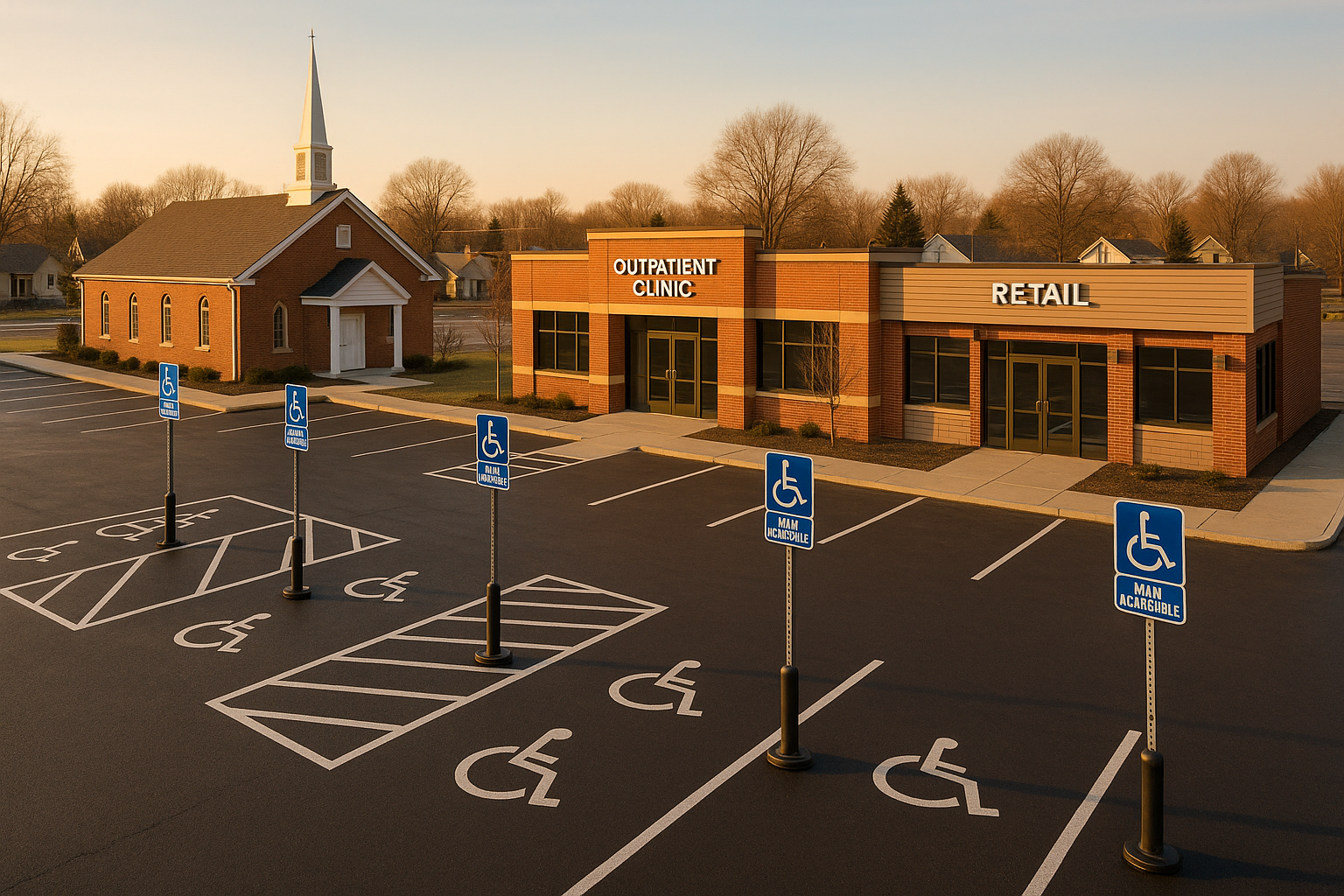
Sealcoating sets the stage for striping that pops. A fresh black surface makes those white and blue lines, arrows, and ADA symbols practically glow. But you can’t stripe right away—the sealer needs to cure fully, usually 24–48 hours, before paint or thermoplastic will bond well. Once cured, we recommend a complete restripe to original layout or an updated one that meets current ADA compliance, fire lane codes, and directional flow. If your lot’s lines have faded to nothing, it’s also a chance to fix awkward parking angles or add stalls. After sealcoating, we often hear from business owners that customers actually park straighter because they can see the damn lines. Small things.
How Often Should You Do This?
In the Midwest, with our weather and plow traffic, most commercial lots need sealcoating every 24–36 months. That’s not a rule, though—some high-traffic lots near retail corridors or industrial areas might need it every two years. Lighter-use lots, like at a church or small office park, can stretch to three. The best move is to inspect in spring and fall: look for fading, surface wear, and new cracks. Catch those cracks early with asphalt crack sealing and they won’t turn into potholes. We wrote a whole piece on how often to sealcoat a commercial lot if you want to dive deeper into frequency decisions.
Common Questions (and Straight Answers)
A lot of people stress about the same things. Will the sealer peel? Not if the prep is right and you don’t coat over failing pavement. Is it slippery when wet? That’s why we add sand—testing shows a properly textured sealer gives traction comparable to untreated asphalt. What about the smell and tracking? Water-based emulsions have low odor and minimal tracking, especially after full cure. Will it show every oil stain? Oil spots need primer first, but yeah, a dark surface does show stains more than faded gray—it’s a trade-off for protection. Can we seal fresh asphalt? You need to wait at least 6–12 months before the first sealcoat to let the oils cure out. And the big one: isn’t it cheaper to just wait and resurface later? Cheaper in the short term, maybe. But by the time you resurface, you’re paying for full removal and replacement of the top layer—or worse, base repair. Sealcoating preserves what you’ve got, so you rebuild twice in 30 years instead of three or four times. That’s the sealcoat ROI in a nutshell.
Let’s Walk Your Lot Together
Every lot is a little different—shade patterns, drainage quirks, traffic loads. The only way to really know whether sealcoating is worth it for your property is to get eyes on the pavement. If you’re managing a strip mall in Carmel, an HOA clubhouse lot in Zionsville, or a church in Brownsburg, we’d rather walk the site with you and explain what we see than sell you something you don’t need. PavementPros covers all of Indianapolis and the donut counties—we know the local soil, weather, and code requirements. We’ll give you a clear quote with square footage, prep work, material type, number of coats, cure time, phased plan if needed, and a complete striping scope. No surprises, no pressure. Schedule a site walk and get your quote—we’ll show you exactly what sealcoating can do for your lot and your budget.
Ready for a free lot assessment?
We walk the lot, photograph the problems, and hand you a written plan — no pressure, no obligation.