Last spring, a shop owner in Broad Ripple called us, exasperated. “I just filled that pothole two months ago, and it’s back again,” he said. I drove over and saw the problem right away: water was pooling in the back corner of his lot, no drain in sight. The base under the asphalt was mush. We’ve all been there—Indianapolis gets those drenching summer storms, and suddenly your parking lot has a new lake. But standing water isn’t just an eyesore; it’s eating your pavement from the bottom up. Fixing it means getting serious about parking lot drainage.
Why Standing Water Is More Than a Nuisance
You know how our Indiana winters work: water gets into every crack, freezes, expands, then thaws. That freeze‑thaw dance can turn a tiny hairline fracture into an alligator-cracked mess in one season. (And if you’re not sure what alligator cracking means, it’s exactly what it sounds like—crisscross cracks that look like gator skin. We’ve got a whole post on alligator cracking causes and repairs if you want to geek out.) The real culprit isn’t the surface cracks, though. It’s what happens underneath. When water sits, it soaks down and turns the stone base into soup. Then every car that rolls over flexes the asphalt until it crumbles. That’s why you keep getting potholes in the same dang spot.
Around here, our clay-rich soil makes it even worse. Water doesn’t perk away quickly; it just hangs out. So if your lot has even a slight dip, you’ll have a bathtub effect. I saw this at a church in Avon—a low corner that stayed soggy for days after rain. They’d patch the potholes every spring, and by July they were back. The fix? We had to restore the slope so water headed toward the catch basin, not away from it. That’s asphalt drainage solutions in action.
How to Spot Drainage Problems Before They Turn Ugly
Not all drainage issues are as obvious as a lake in your lot. Here are some telltale signs you can check yourself next time you walk the property (maybe with a coffee in hand):
- Water sticking around after 48 hours: A well-graded lot should drain within hours. If you’ve got puddles that linger, the slope is off.
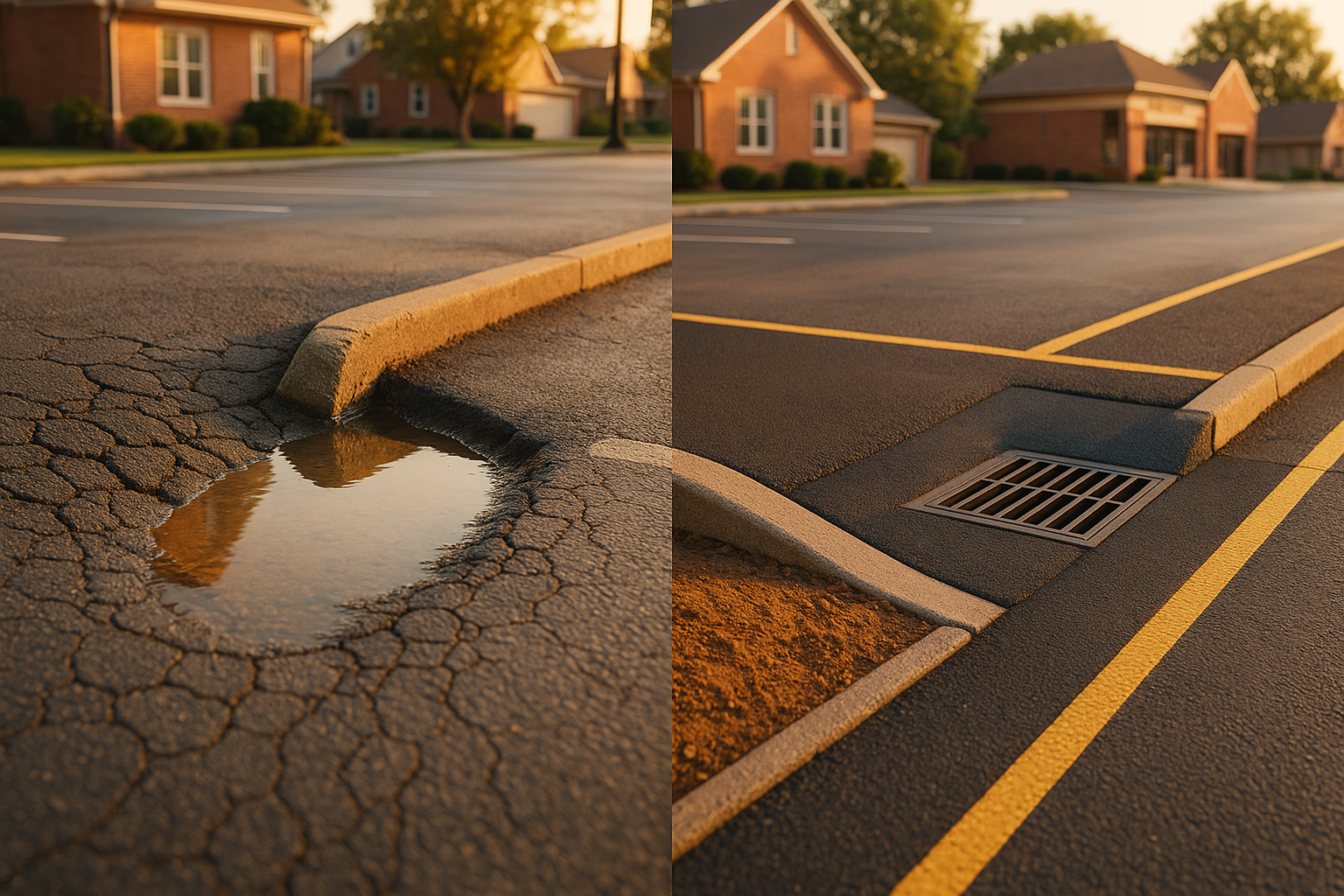
- Ghost rings around catch basins: That white or rusty stain around the grate means water’s been pooling and evaporating there—often because the basin is set too high or the concrete collar has sunk.
- Sediment trails and silt: After a storm, look for dirt lines showing where water flowed and then stopped. These point right to low spots.
- Potholes that keep coming back: If you patch a hole near a drain and it fails quickly, you’ve probably got subgrade saturation underneath.
Here’s a story: a facility manager in Fishers noticed the same three parking spaces near a curb inlet always had puddles. Turns out the inlet grate was actually a half-inch higher than the pavement. Water just skated right past it. We pulled the casting, rebuilt the concrete collar, and matched it to the new asphalt patch. Problem solved. That’s a classic catch basin repair.
Fall is a sneaky troublemaker, too. In towns like Westfield and Noblesville, leaves and twigs clog up curbside inlets faster than you’d think. I’ve seen lots where the drain was completely hidden under a mat of wet leaves. One heavy rain and you’ve got an instant pond. Routine basin cleaning makes a huge difference.
What a Real Fix Looks Like (Spoiler: It’s Not Just Filling Potholes)
I get it: your budget is tight, and you want to just slap some cold patch into the holes and call it a day. But if you don’t fix the parking lot ponding water issue, you’re throwing money away. Here’s how we think about repairs, from simple to complex:
1. Mild grade issues
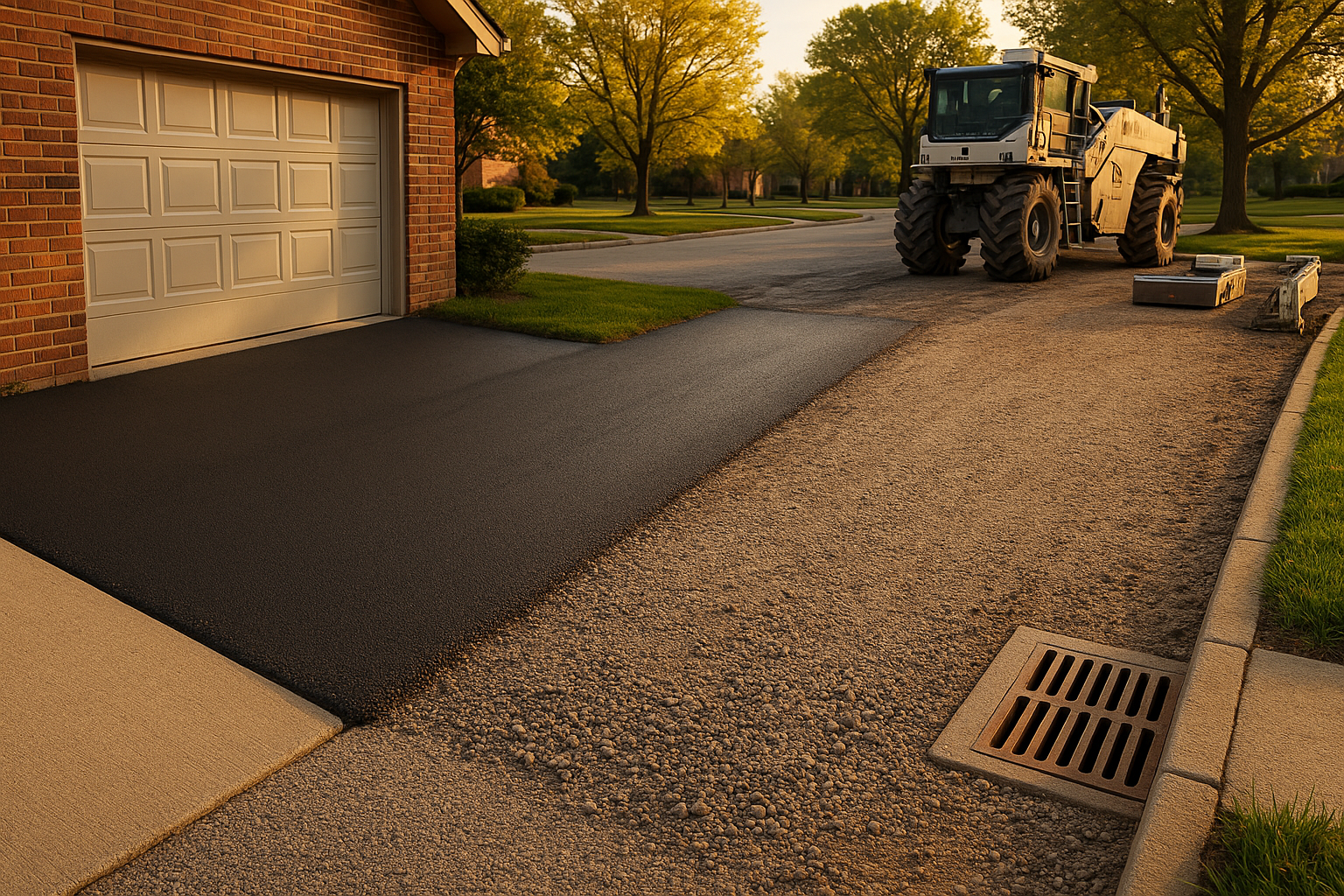
If the lot has decent general slope but a few shallow birdbaths, surface milling and a thin overlay can re-establish pitch without a full rebuild. We literally shave down high spots and lay a new smooth layer that guides water toward the drains. It’s like giving your lot a fresh start.
2. Catch basin and inlet adjustments
Sometimes the drainage structure is solid but just the wrong height. We can raise or lower the casting to meet the new asphalt grade, replace broken concrete collars, and seal all the joints so water doesn’t sneak down the sides.
3. Adding new drains
When there’s no existing drain and water pools at a low entrance or between two buildings, a trench drain across the threshold can be a lifesaver. I’ve installed these at a couple HOA clubhouse lots in Greenwood where runoff from the roof dumped right onto the asphalt. Paired with a small swale, it redirected the water cleanly.
4. Underdrains for saturated spots
If you have a corner that never dries out, we might need to dig down and put in a perforated pipe wrapped in stone—an underdrain—that carries groundwater away before it rises into the base. It’s more invasive but sometimes the only way to beat that heavy clay soil.
5. Full-depth patching
For those cratered areas around drains where the base has failed, we’ll cut out the whole section, compact fresh stone, and patch with hot-mix asphalt. No more sinking. When we do this around inlets, we also make sure the new surface has a crisp, positive slope so water flows into the grate, not around it.
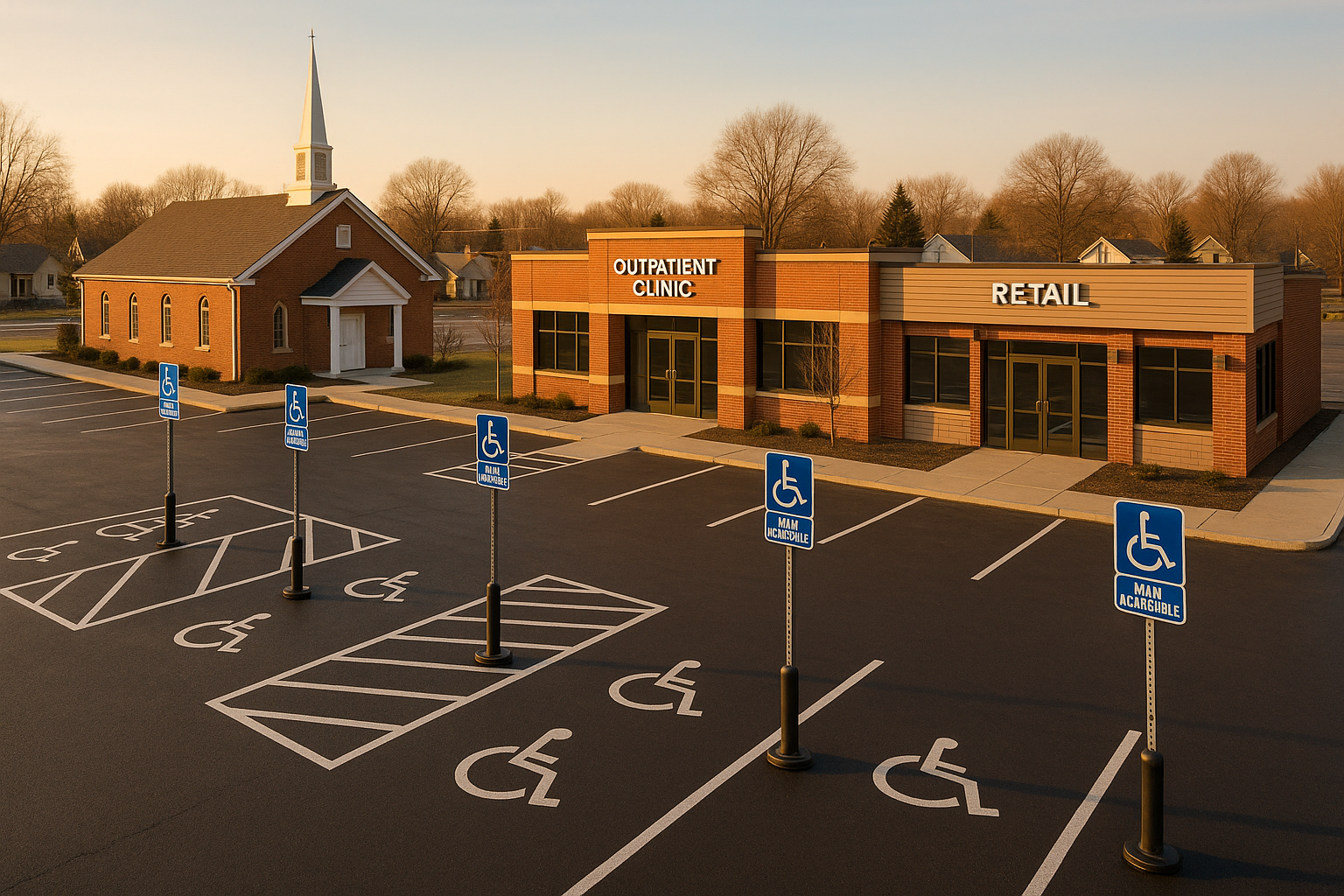
Throughout all this, we’re constantly checking grade with a laser level. Indianapolis lots have to balance slope requirements for drainage with ADA accessibility rules. You can’t tip a cross‑slope so steep that a wheelchair user struggles. That’s a dance we do a lot—getting enough pitch to drain while keeping accessible routes flat enough. If you’ve heard that ADA and drainage don’t mix, they can; it just takes careful planning. After any grade changes, we’ll also re-stripe the lot so accessible stalls and aisles are up to code. (By the way, how often should you restripe? is a question we get a lot.)
Keep Your Fixes Alive with Simple Habits
Once the drainage corrections are in place, don’t let them fall apart from neglect. I always tell property managers: sweep the lot regularly, especially before rain. It’s tedious but getting grit and leaves out of the way prevents miniature dams. And for the love of all that’s holy, clean out your catch basins and curb inlets at least twice a year—once in spring and once after the leaves drop. A clogged basin in a fall storm can flood half a lot in 20 minutes.
Crack sealing is another cheap insurance. When you see small cracks, seal them up before water gets in. It’s a lot less painful than a full patch later. (And if you’re not sure the difference between crack filling and crack sealing, we break it down here.) Think of it like putting a bandage on a small cut before it gets infected.
We’ll Work Around Your Schedule—Not the Other Way Around
I know what you’re thinking: “This all sounds great, but I can’t shut down my business for a week.” We get it. Most of our drainage repair jobs are phased so one section of the lot stays open while we work on another. For a medical office in Carmel, we did all the patching and inlet adjustments on a Sunday, so come Monday morning, it was like we’d never been there—except the water was gone. Near busy spots like the Keystone at the Crossing area or downtown, we often work nights or weekends. Traffic control, clear signage, and tight cleanup are standard. You don’t need a headache on top of a puddle.
Ready to Ditch the Puddles for Good?
Look, you can keep filling potholes every spring and hoping for the best. Or you can get one of our guys out to shoot elevations, map the trouble spots, and give you a straightforward plan. No pushy sales pitch—just a clear scope with a map showing what we’ll do and what it’ll cost. We’ve fixed drainage for small retail centers in Plainfield, churches in Zionsville, HOA lots in Brownsburg, and plenty of spots in between.
If you’re tired of seeing water where it shouldn’t be, request a site assessment. We’ll come out, take a hard look, and tell you honestly what needs to happen. Even if you decide to do nothing this year, you’ll know exactly what you’re dealing with.
So grab your boots, walk your lot after the next rain, and if you spot trouble, give us a shout. Good parking lot drainage isn’t rocket science—it’s just paying attention to where the water wants to go. We can help you point it the right way.
Ready for a free lot assessment?
We walk the lot, photograph the problems, and hand you a written plan — no pressure, no obligation.