Megan, who runs a facility over in Avon, punched the keypad and stared at the blurry lines fading into the asphalt. A tenant had complained for the third time about someone blocking their unit because nobody could tell where the loading zone ended. She knew it was time to do something, but the idea of shutting down the whole place? No way. That’s the exact headache most self storage managers face, and it’s why getting your self storage parking lot maintenance dialed in is more about planning than just paint.
Why faded lines cost you more than you think
Crisp striping does way more than look pretty. It’s the silent traffic cop when you’re not standing there. Clear drive lanes, stop bars, and unit numbers keep tenants from playing bumper cars—especially at move-in month-end rushes, which we all know hit hard around here. When a new renter pulls up and can instantly spot their unit, the loading zone, and where not to park, they feel like the place is well run. That little shot of confidence? That’s what gets you good reviews and renewals. On the flip side, faded marks lead to confusion, fender benders, and the kind of complaints that take years off a property manager’s life.
The layout you didn’t know you needed
A self storage lot isn’t just a mini parking lot. It’s a ballet of box trucks, car doors, and people juggling stuff. Most places miss the small stuff that makes a huge difference.
Unit numbers and keep-clear zones
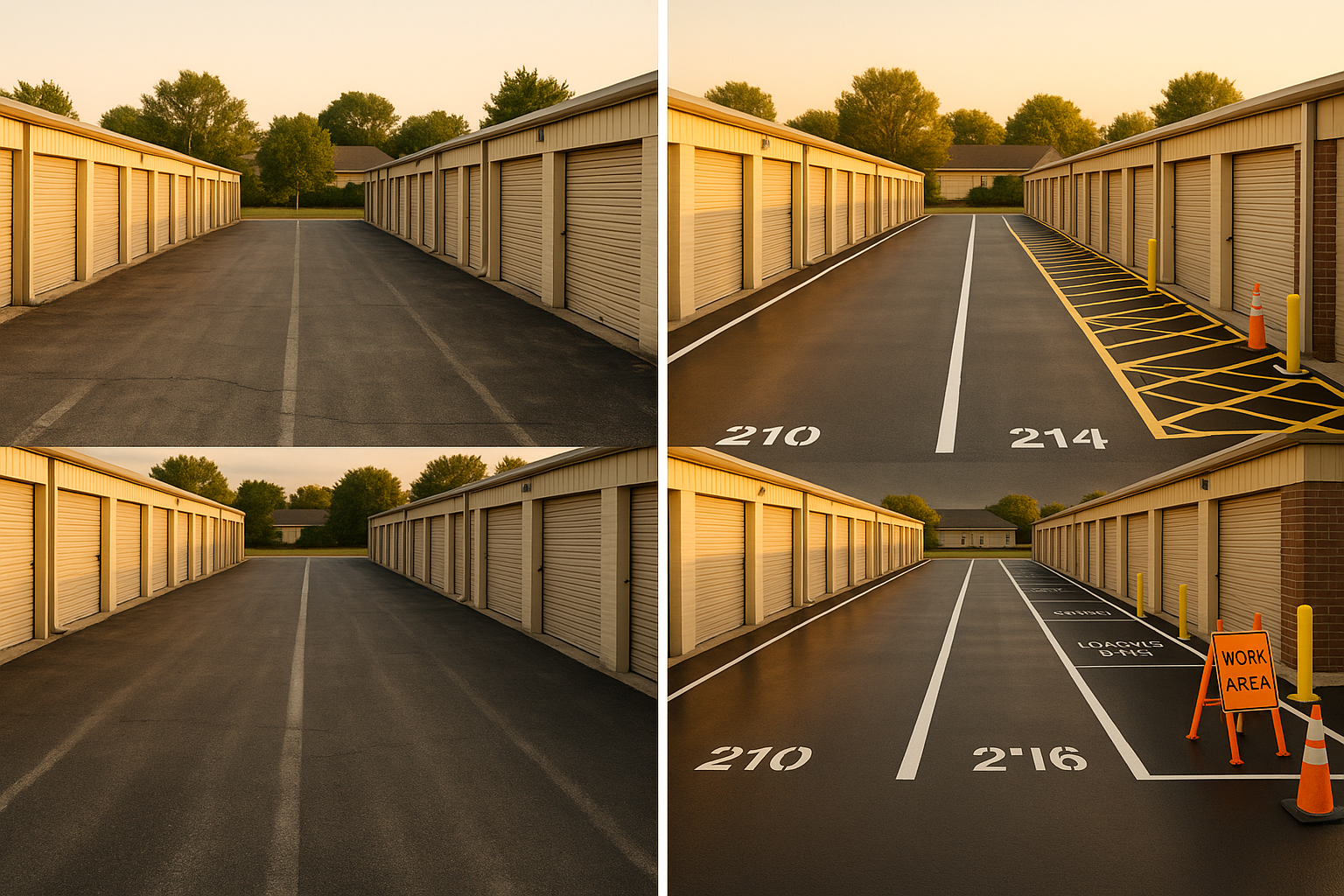
Spray-painting unit numbers right on the pavement in front of roll-up doors? That’s a no-brainer, but you’d be surprised how many lots skip it. It cuts down on people driving around squinting. Then there are keep-clear hatching zones at building ends—those sharp corners where a 26-footer can’t swing wide if somebody’s parked there. Mark those clearly with crosshatches and you’ll stop the “Can you move your truck?” phone calls.
Gate queues and stop bars
Ever watch a tenant inch up to the keypad, blocking the car behind them from reaching the arm? A queued lane with a stop bar and directional arrow fixes that. This is where a lot of Indiana facilities mess up—they use cheap paint that snowplows scrape off by February. For Indianapolis parking lot striping, especially at gates, you need high-solids paint with glass beads, or even upgraded epoxy if the budget allows. It’s a high-wear spot that takes a beating.
Loading bays and arrows
If you’ve got assigned loading spaces, stripe them bright with “LOADING ONLY” stencils. One-way drives need arrows and yield bars so nobody has to back up 200 feet because a truck is coming the wrong way. I’ve heard from a manager in Carmel who watched a tenant wedge a rental truck into a bollard because the traffic flow wasn’t marked. An hour of restriping would’ve saved a thousand-dollar repair.
Making stripes survive an Indianapolis winter
Our freeze–thaw cycles, road salt, and plow blades are line-paint killers. You can’t just slap down any paint and hope. High-solids, fast-dry traffic paint with heavy reflective beads is the baseline. At gates, stop bars, and any spot where a plow scrapes, think epoxy or thermoplastic—those stand up to abuse way better. And for the love of all things smooth, tell your plow contractor to use rubber-edged shoes. It’s a simple hack that adds months to your line life. Indy winters also mean timing matters: don’t stripe when it’s too cold for paint to cure right. Late spring through early fall is your window, which lines up nicely with sealcoat season. (And yes, you stripe after sealcoating, with a proper cure wait—more on that in a sec.)
Phasing: How to never close your gates
“We can’t shut down—tenants need 24/7 access.” I hear that all the time. Good news is you don’t have to. Self storage parking lot maintenance can be phased building by building or zone by zone. A decent contractor will tape off a section, put up cones and temporary signs, and work while tenants use the rest of the lot. Off-hours or weekend striping is pretty common around here. I’ve seen crews knock out half a facility on a Saturday in Greenwood while the other side stayed fully open. Key is a simple plan map you can email tenants ahead of time. Nobody freaks out if they know what to expect.
Compliance stuff that keeps the fire marshal happy
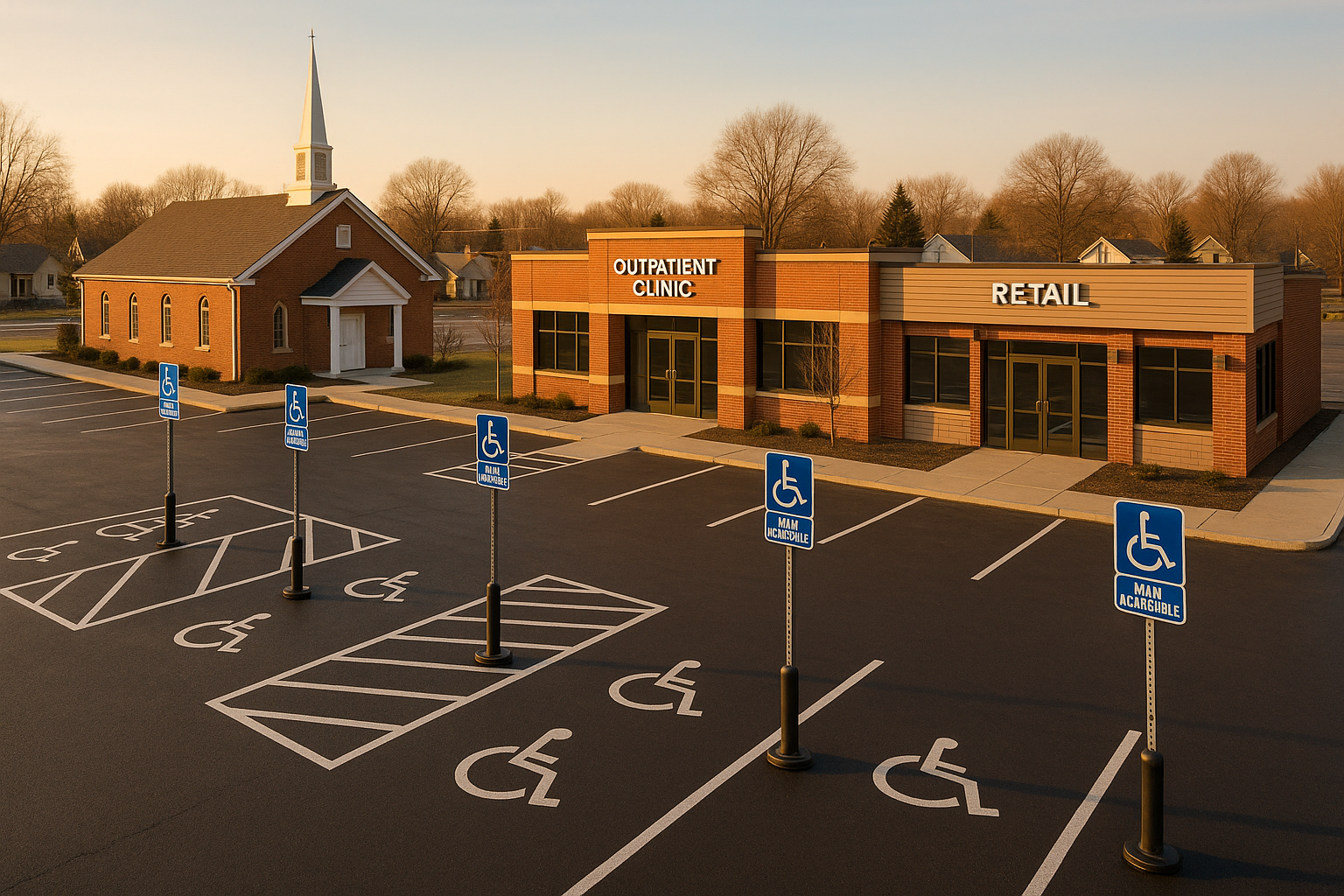
Fire code isn’t a suggestion. The Indianapolis Fire Department will tag you if fire lanes aren’t clearly marked. That means red curbs with “FIRE LANE” stencils, hydrant clearances kept visible, and access routes wide enough for engines. ADA compliance is just as big. You need van-accessible stalls near the office, with proper access aisles, and a clear path to the door that doesn’t cross trip hazards. A lot of older properties in towns like Brownsburg or Plainfield never updated their striping after a pavement patch—now there’s a hump in the midpoint of an access aisle. That’s a liability no manager needs. When we do a site walk, we check slopes and mark travel paths so everything’s up to code.
Budget like you mean it
Restriping in Indianapolis usually lasts 12–24 months before it looks tired. You can stretch that by keeping the lot swept (pollen in spring, leaves in fall) and asking plow guys to go easy on the blades. But you will need to budget for it as a line item, not an emergency. Some managers try to squeeze it into a sealcoat cycle—which is smart, because you get both done within the same temperature windows. Just remember: fresh sealcoat needs curing time before paint sticks. Our sealcoating myths post gets into that timing. For bigger capex planning, a property manager’s bidding guide walks you through how to get scopes and quotes that compare apples to apples. That way, when you sit down with your regional director, you’ve got a clear plan with per-linear-foot pricing, stencil counts, and an as-built layout map.
When to call in the pros
Yeah, your maintenance tech can spray some lines with a $50 striping wand. But will they last a season? Will the stencils be legible? Will the paint dry before tenants roll through it? (That’s a mess I once saw in Fishers—a renter tracked white paint all over a new rug.) Fumes and noise near indoor units are another thing to watch; a pro crew knows how to ventilate and mask off. PavementPros does this every day in Indy and the donut counties. We can work with corporate color specs, mark unit numbers, layout a whole circulation plan, and give you a before/after photo set so you can prove to the owners it was money well spent.
If you’re tired of squinting at your own lot, grab a free site walk and a phased striping plan. No shutdowns, no surprises—just a clear scope and a firm quote. Hit us up here and let’s get that asphalt crisp again.
Ready for a free lot assessment?
We walk the lot, photograph the problems, and hand you a written plan — no pressure, no obligation.