I got a call from a facility manager in Fishers last spring. “Someone’s going to sue us,” she said. A tenant had tripped over a lifted section of asphalt near a drain, tore a suit, and sprained an ankle. The lot looked fine from a distance—stripes were visible, spaces marked—but up close, it was a minefield of uneven patches and faded crosswalks. That call wasn’t about paint. It was about risk. That’s the thing about parking lot trip hazard liability: it’s not just about cracks and potholes. It’s about the people who walk across your lot every day, and whether you’ve done enough to keep them safe.
The Hidden Hazards Lurking in Indianapolis Lots
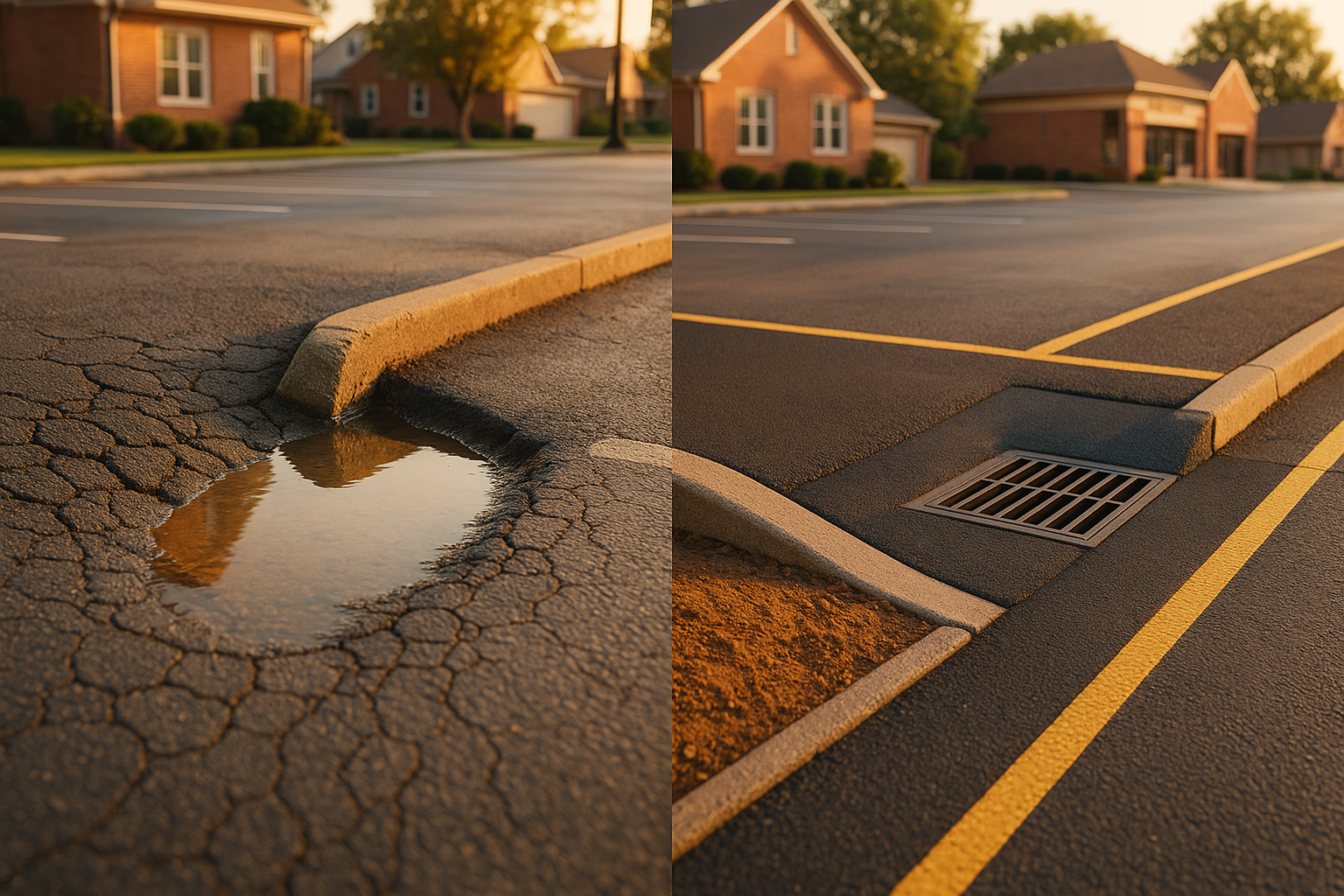
What even counts as a trip hazard in parking lots? It’s any abrupt height change that can catch a shoe. Think: a patched area that’s settled a half-inch lower than the surrounding asphalt, a broken wheel stop jutting up, a sunken utility lid, or a pothole that’s been “temporarily” filled with loose gravel. Over in Carmel, we see a lot of freeze-thaw pavement heaving—the ground freezes and expands, pushing slabs up unevenly. By spring, you’ve got ridges where there should be smooth pavement. Then snowplows come through and scrape off the top layer of striping, sometimes knocking wheel stops out of alignment entirely. I’ve seen a church lot in Zionsville where a plow pushed a concrete wheel stop three feet over, right into the middle of a walk path. That’s a lawsuit waiting to happen.
And it’s not just winter. Fall leaf drop clogs drains across Fishers and Greenwood, creating ponding zones that ice over come December. Standing water also hides dips and cracks. A pedestrian hurrying to their car doesn’t see that slick, sunken spot until they’re on the ground. When you add faded crosswalks or old, conflicting stripes that confuse people about where to walk, you’ve got a confusing mess. This is where parking lot risk assessment comes in—you need to look at your lot the way a stranger would, in the dark, in the rain.
Striping: More Than Just Paint
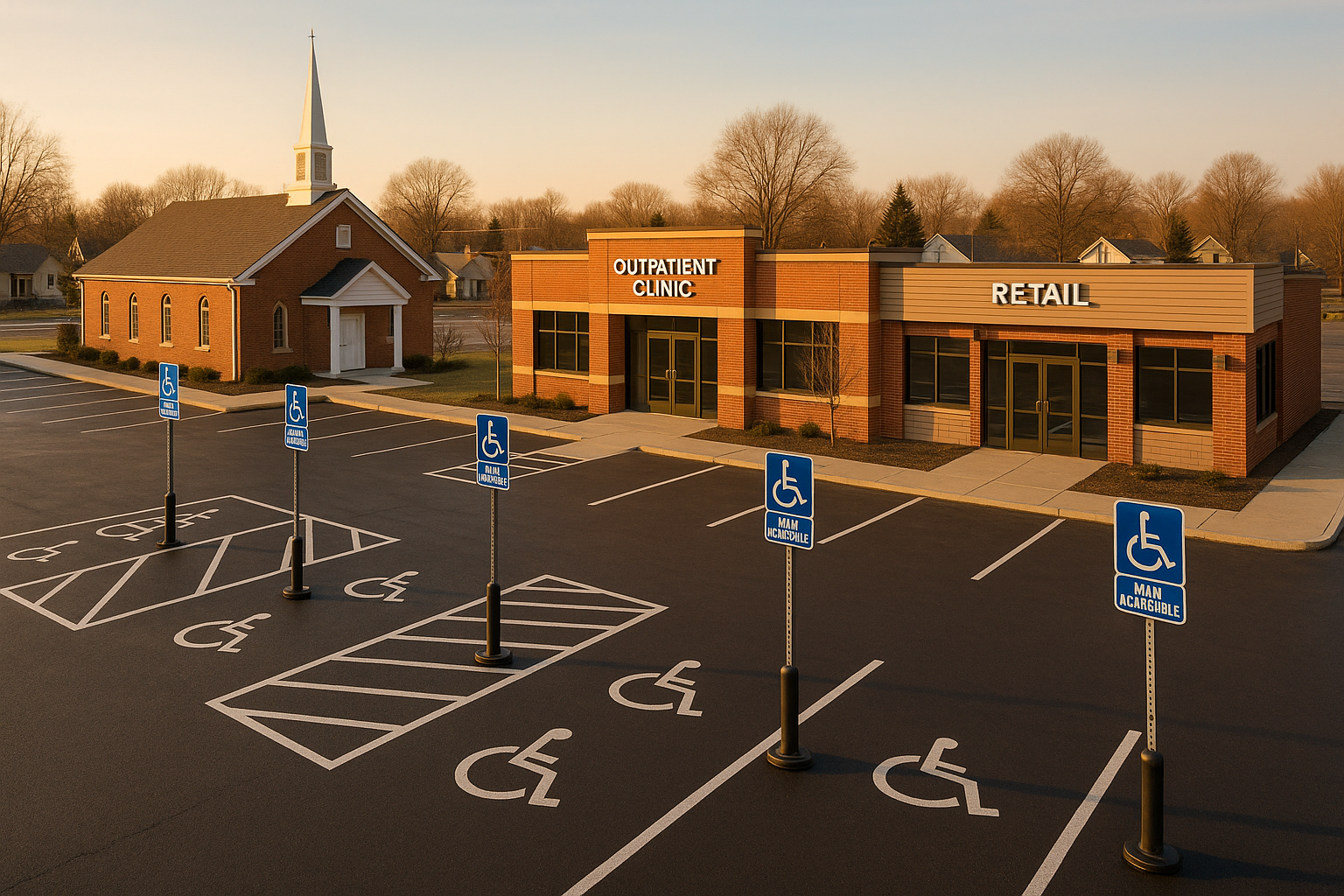
Here’s a truth most people miss: good line striping Indianapolis style isn’t about making the lot pretty. It’s about directing traffic—both cars and feet. High-contrast, fresh stripes tell drivers where to go, slow them down, and show pedestrians safe paths. That’s core to parking lot striping safety. It also matters for ADA parking compliance. If your accessible stalls aren’t clearly marked, or the van aisle has faded away, you’re not just inconveniencing someone—you could be violating federal law. Accessible route striping that runs from those spaces to the building entrance is just as important. And don’t forget fire lane striping requirements: if a fire truck can’t see the red curb because the paint is worn, that’s a code issue and a safety risk.
We worked with a medical office in Avon that had a tiny lot. Their stripes were so faint that patients regularly parked outside the lines, blocking the accessible route. After we restriped—adding bold crosswalks near the entrance and repainting the van-accessible spaces—the confusion disappeared. Nurses told us they stopped hearing complaints about “no space to unload a wheelchair.” We even added nighttime reflectivity glass beads to the paint so that crosswalks pop under headlights. That’s a simple upgrade that directly boosts slip and fall prevention, because people can actually see where they’re stepping after dark. So when you think about parking lot trip hazard liability, remember that clear markings are a big piece of the puzzle.
Old stripes can be as bad as no stripes. If you’ve ever repainted over an old layout, you might have ghost lines that send mixed signals. We grind those off or black them out so the pattern is clear. Pair that with proper signage and stop bars, and you’ve got a system that works.
Why You Can’t Just Paint Over Problems
Now, here’s the part that some contractors won’t tell you: you need repairs before you paint. If you lay fresh stripes over a cracked, heaved surface, you’re hiding the danger, not fixing it. Asphalt patching before striping is the only honest way to do the job. That means grinding down lips that are taller than a quarter-inch, filling potholes with proper hot mix (not just a cold-patch blob that will pop out in a month), and routing and sealing cracks. We often find sunken utility frames in older Indy lots—those need to be leveled so they’re flush with the pavement. If you skip that step, you’re creating a trip hazard in parking lots that’s now camouflaged by a bright yellow line.
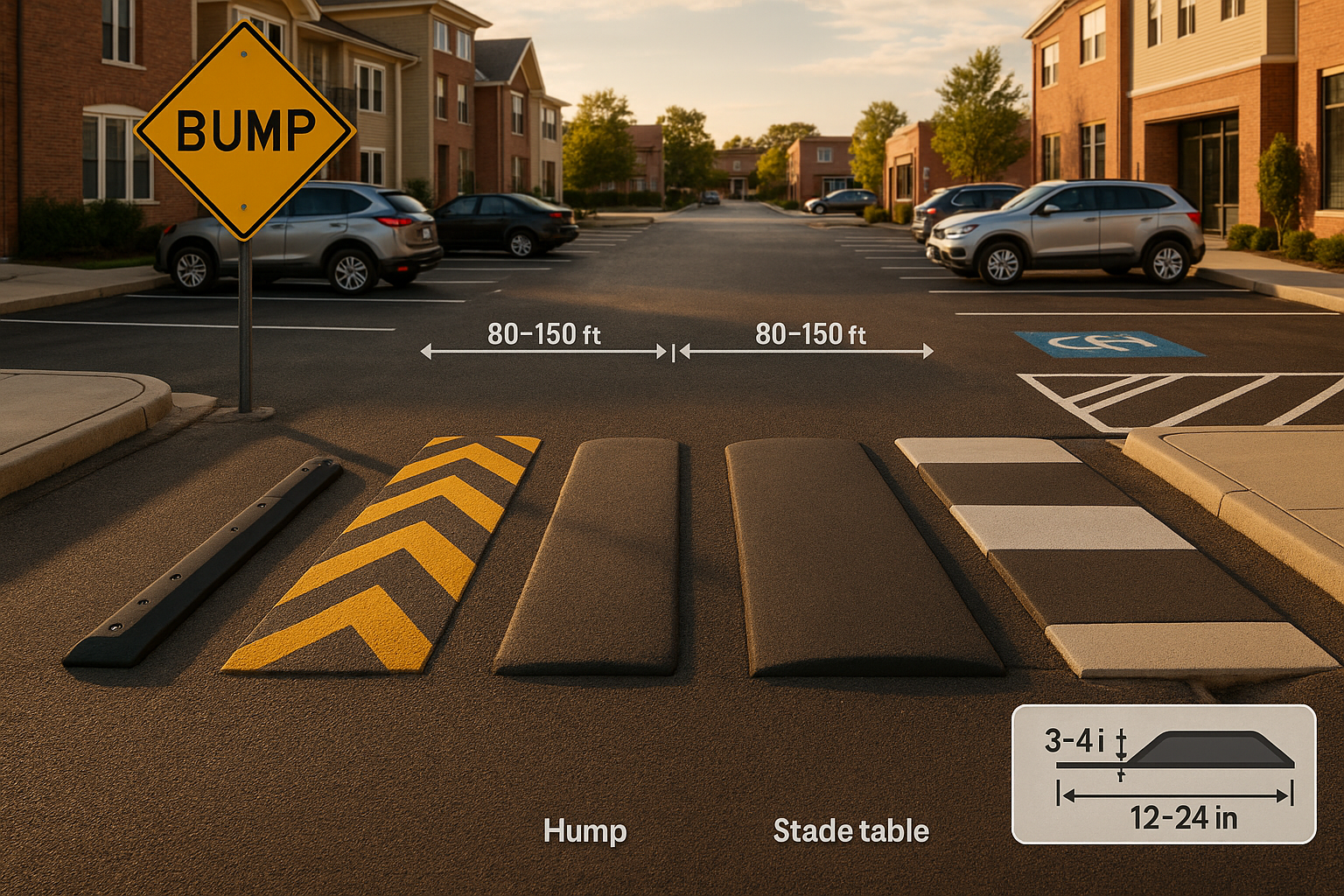
Take wheel stops. They’re everywhere, but they’re tricky. A misaligned stop can become a toe-stubber right where someone steps out of a car. Sometimes the safest move is to remove them entirely and adjust the stall geometry so the curb or landscaping does the job. We’ve done that for an apartment complex in Noblesville—after tripping incidents, we pulled the stops, restriped the spaces a bit shorter, and planted low shrubs at the end. No more stubbed toes. There’s a whole art to wheel stops hazards and when to let them go.
Drainage and ponding repair is another pre-paint must. Standing water not only breeds ice patches, it also accelerates asphalt deterioration. If your lot has low spots near a walkway, you’re begging for a slip-and-fall on a cold February morning. Regrading those areas or adding catch basins might be needed. In places like Plainfield and Brownsburg, where rainfall can be heavy, a smooth lot with proper slope keeps water moving toward drains, not pooling where people step.
We hear the objection all the time: “Paint won’t fix our hazards—we need repairs first.” You’re right. That’s why our process always begins with a walk-through and a repair plan. If the pavement is too far gone, we’ll tell you. And yes, work can be done in winter—patching and crack filling are possible in colder temps with the right materials. Striping, though, needs warmer weather. So we schedule around that.
A Maintenance Plan That Actually Fits Your Schedule
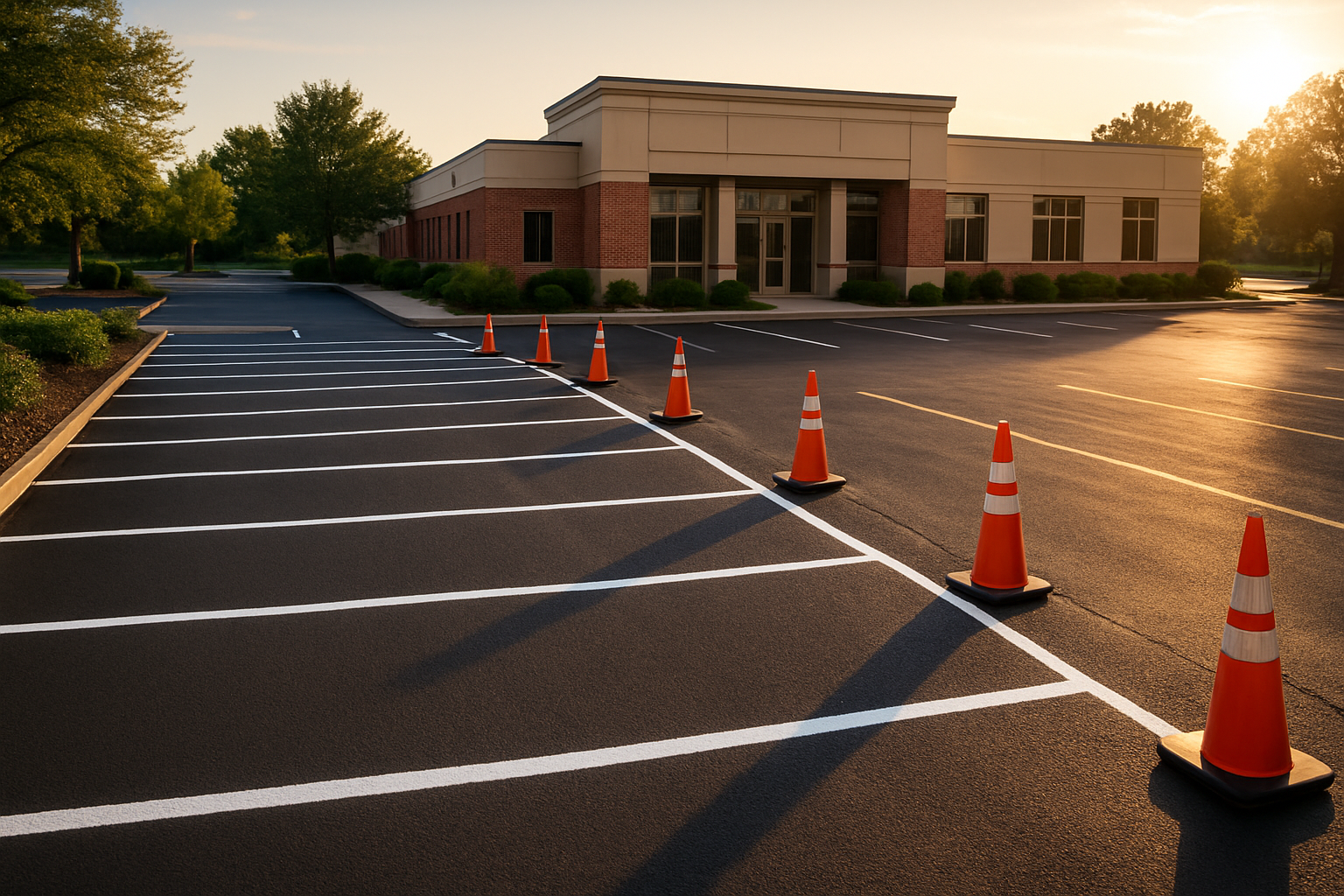
I know what facility managers are thinking: “We can’t shut down the lot for a week.” Or “Multiple tenants make scheduling impossible.” We get it. That’s why parking lot maintenance plan conversations always start with phasing. For a strip mall in Greenwood with a dozen shops, we restriped half the lot one night, reopened it by morning, then did the other half the next night. We placed clear signs and cones, and let tenants know ahead of time. Nobody lost business.
A good plan also covers inspection and documentation. Insurers love it when you can show them a dated photo log of repairs and a simple map of issues that were addressed—something we walk through in our guide on how to read a pavement condition report. For parking lot liability Indianapolis, having a regular inspection cadence—say, a spring walk-through after the thaw, a summer repair window, a fall drain clean-out, and a winter snow/ice plan—shows reasonable care. It’s not a legal shield, but it’s the difference between a defensible position and a risky one.
We also look at sightlines. In an older lot in Lawrence, we removed some overgrown bushes that blocked the view where a crosswalk met the entrance. Simple stuff, but it matters. Crosswalk visibility is another check: are the lines bright enough and free of wear? Do you need fresh reflective beads? Little things add up. A consistent maintenance schedule is your best defense against parking lot trip hazard liability claims.
If you’re worried your lot is fine because your last insurance audit went okay, remember: audits often focus on big-ticket structural issues, not the half-inch lip by the dumpster or the faded accessible symbol. A person with a cane or a parent pushing a stroller feels those hazards every day. Don’t wait for a claim to wake you up.
Let’s Take a Walk Together
Here’s what we offer: a no-pressure, on-site hazard walk-through. We’ll bring a clipboard, a camera, and a measuring tool. We’ll note every lip, crack, and ghost line. Then we’ll give you a clear, written scope—what needs fixing, what needs painting, what the phasing looks like, and how much it’ll cost. No surprises. If you want to take it a step further, we’ll map out a year-round maintenance rhythm so your lot stays safe through every season.
We’re PavementPros, and we’ve been doing this across Indianapolis, Carmel, Fishers, Zionsville, Westfield, Noblesville, Greenwood, Brownsburg, Avon, and Plainfield for a while now. We know the local conditions—the freeze-thaw cycles, the plow damage, the drainage quirks. Our goal is to make your parking lot safer and your liability smaller, one striped line at a time.
Ready to get ahead of a problem? Schedule your free walk-through here and let’s talk about what your lot really needs.
Ready for a free lot assessment?
We walk the lot, photograph the problems, and hand you a written plan — no pressure, no obligation.