I got a call last March from a facilities manager up in Fishers. She was staring at a $12,000 bill for emergency lot restriping because the winter plows had scraped the lines down to ghost marks. “We just did this two years ago,” she said. “Why didn’t anyone tell us a parking lot maintenance contract would’ve covered this?” She’s not alone. Most property folks around Indy deal with things reactively—calling for striping only when it’s totally gone, sealing right before an inspection, patching potholes after someone’s tire gets eaten. But a solid contract flips that script.
A parking lot maintenance contract spells out exactly what gets done, when, and for how much, so there are no surprises. For apartment complexes in Greenwood, medical offices in Carmel, or self-storage facilities out in Avon, it’s the difference between a liability headache and smooth, predictable operations.
Why a Contract Beats Calling Someone Every Year
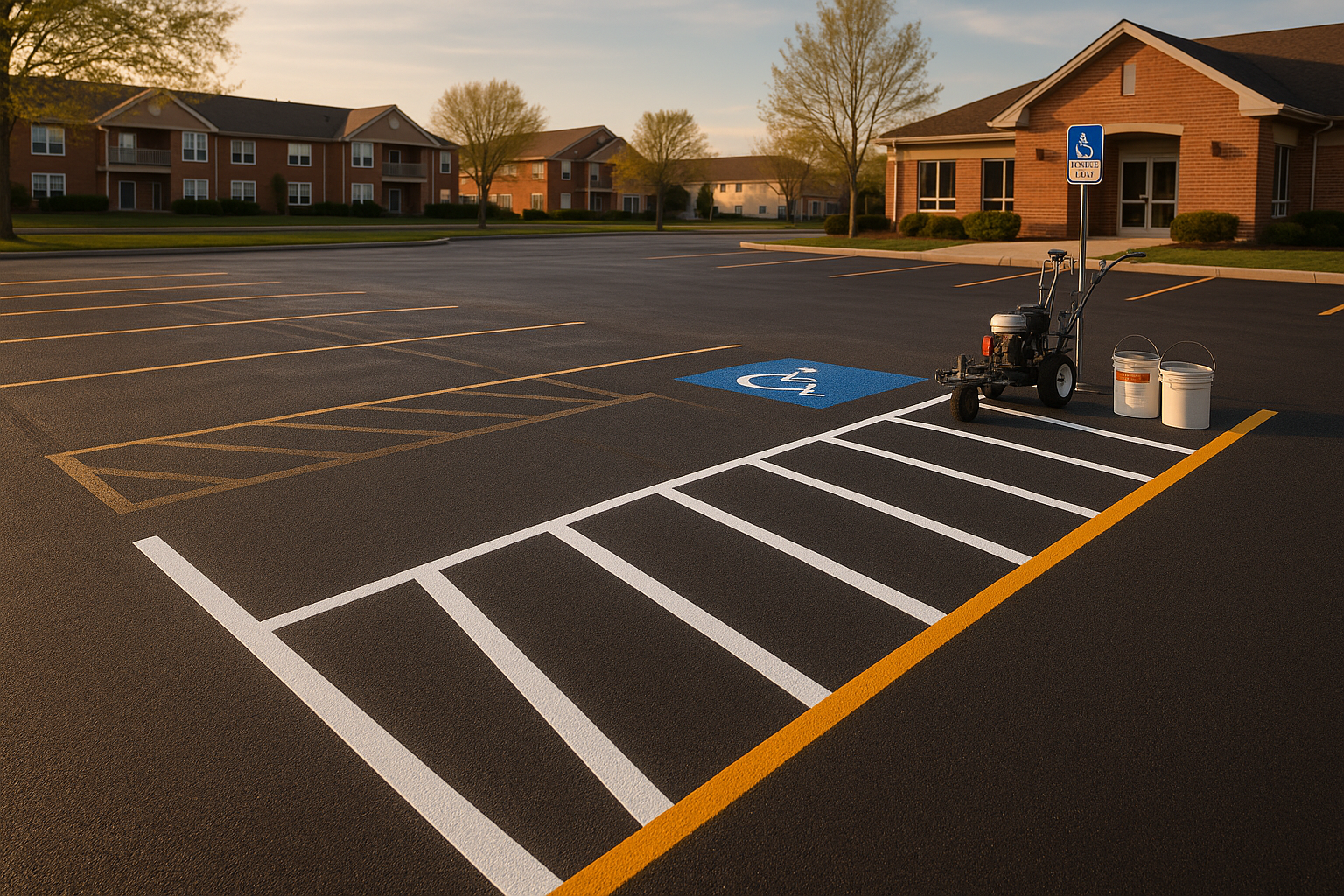
When you call a striper only after the lines have faded, you’re scrambling. You might get lucky with a crew available that week, or you might wait six weeks while tenants complain. With a contract, re-striping cadence is baked in—usually every 12 to 24 months, or sooner if your lot takes a beating from snowplows. That means your line striping schedule is planned, not panicked. Plus, budgeting gets way easier: instead of random invoices, you’ve got predictable unit pricing per stall and per linear foot. No more “I didn’t expect that add-on” moments.
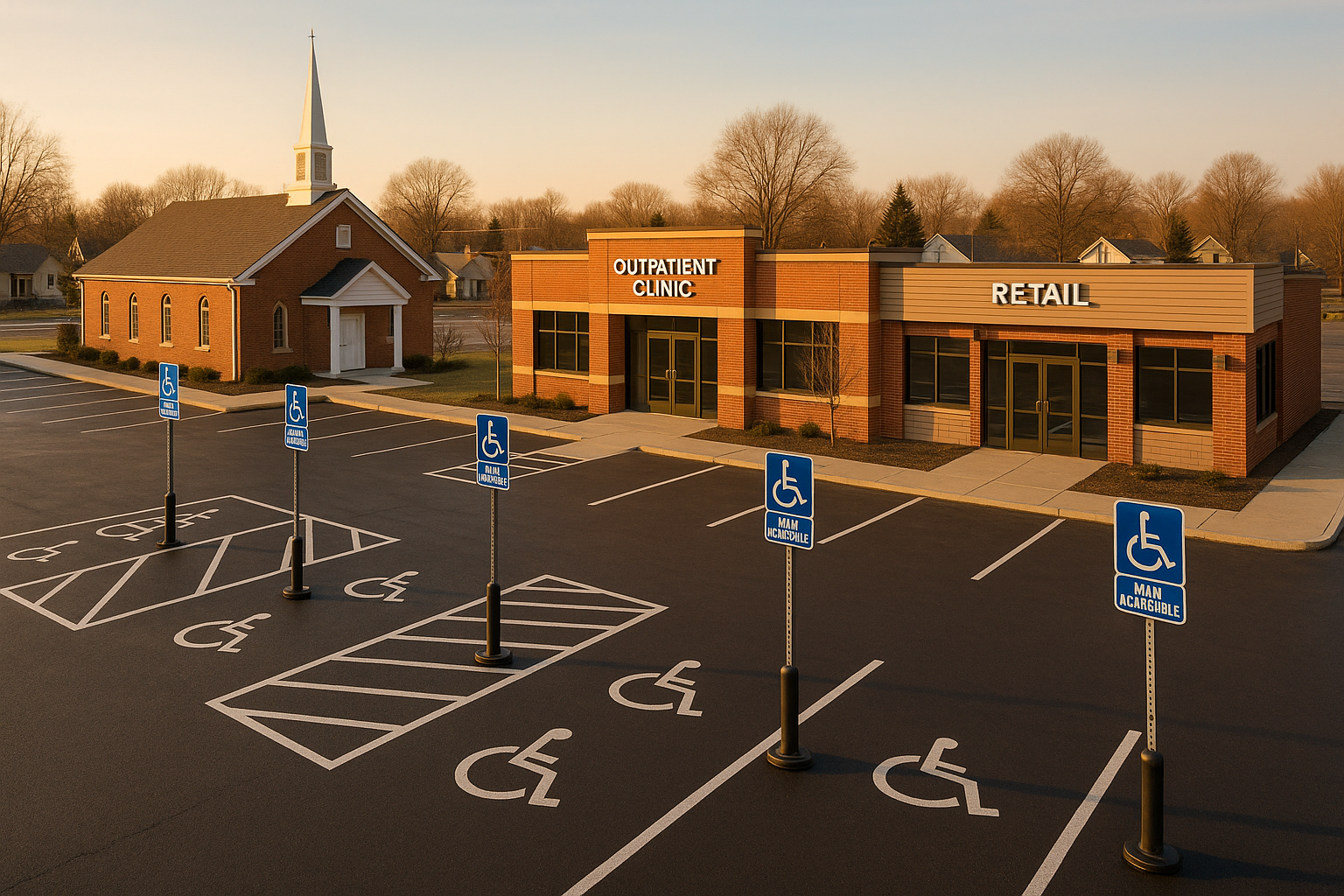
And here’s something your insurance carrier loves: a pavement maintenance plan that includes regular ADA parking compliance checks. One missing sign or faded blue stencil can invite a lawsuit. A contract ensures those access aisles and van-accessible stalls are always crisp.
What Should a Solid Contract Include?
First, ask for a measured site map and an itemized scope of work. You want stall counts by type—standard, ADA, compact—and dimensions of all curbs, crosswalks, and stop bars. This document becomes your baseline, so you’re not paying for imaginary lines. A good contractor, like PavementPros, will walk the lot with you and confirm the layout before ever popping a chalk line.
Next, spell out the materials. In Indianapolis, we recommend waterborne acrylic striping paint for most lots. It holds up better in our freeze-thaw seesaw than some oil-based paints, and it dries fast—often traffic-ready in 30 minutes, depending on humidity. Include glass beads for night visibility where needed. Curious about thermoplastic vs traffic paint? Thermoplastic lasts longer but costs more and requires special application; it’s overkill for most suburban retail spots but great for high-traffic intersections or fire lanes.
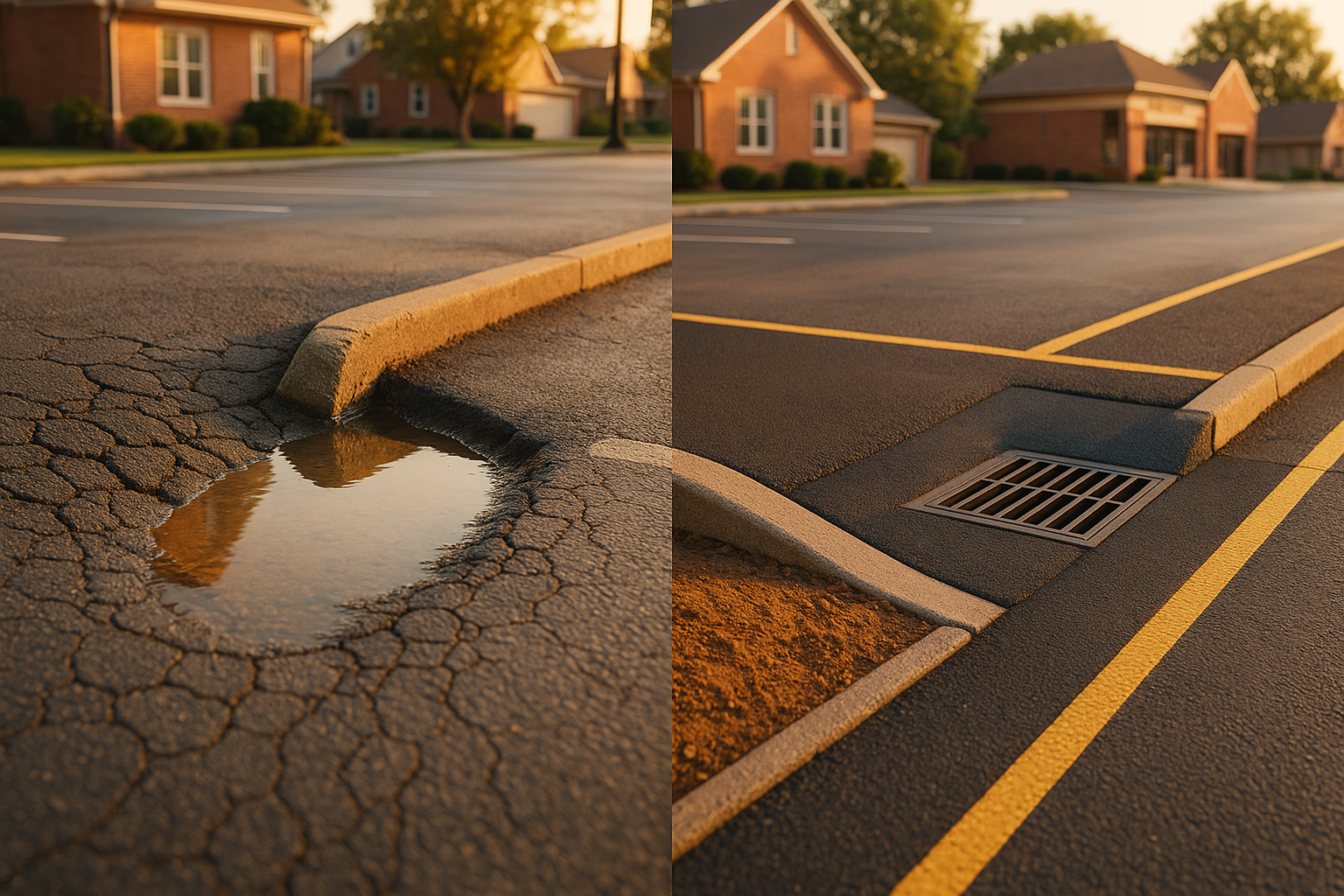
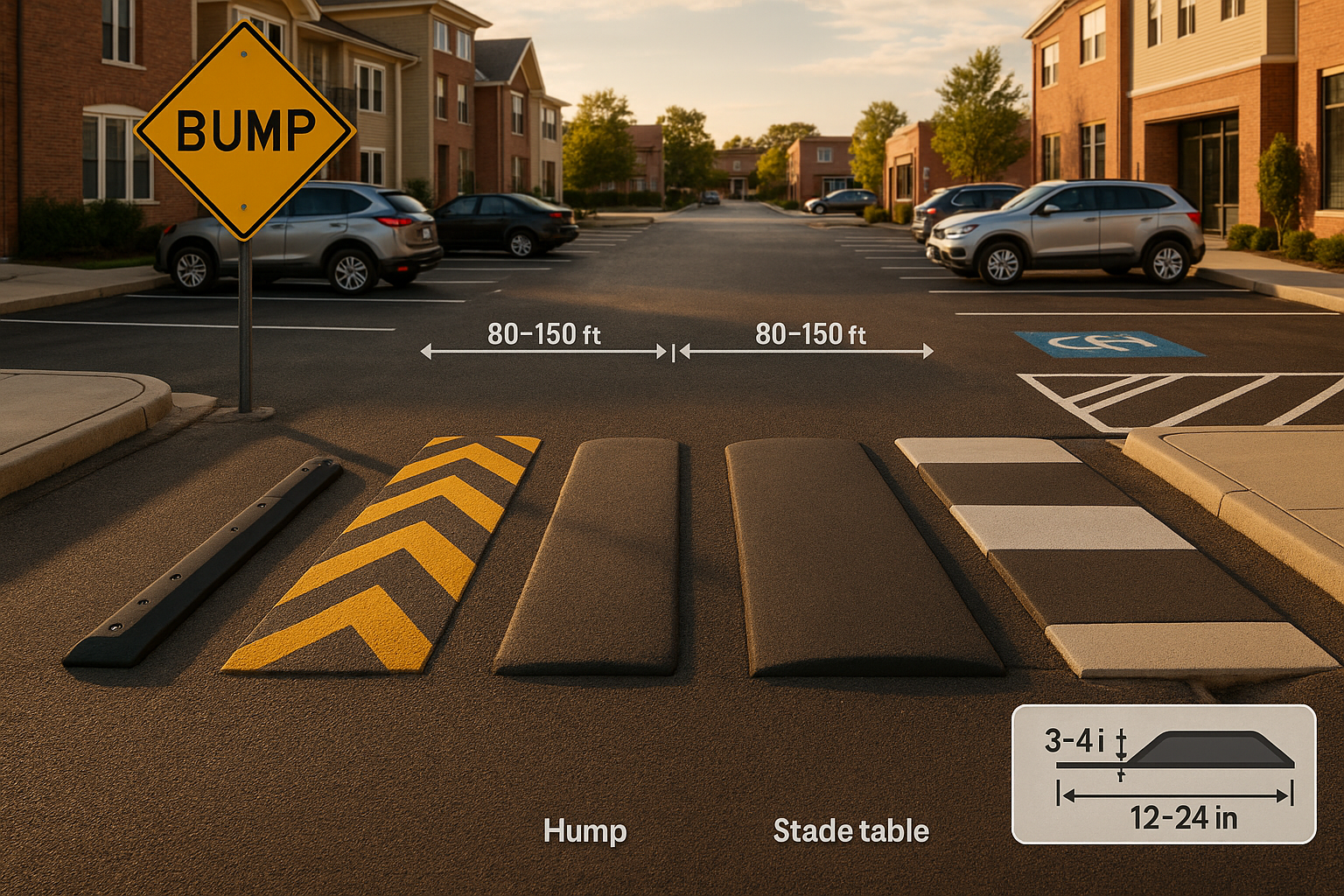
Beyond paint, your contract should cover crack sealing and small pothole repair. Those get worse every winter, and if you don’t patch them before re-striping, the new lines will crack and look shoddy in months. Also insist on a warranty for striping—typically 90 days to one year, covering premature fading or peeling. And don’t forget the little things: curb painting, stencil work for numbers and arrows, and wheel stops. Those details make the lot look professional and keep cars in their lanes.
Operationally, a traffic control plan matters more than you’d think. You don’t want tenants blocked from their offices or residents circling for parking. A contract should specify phasing: half the lot stays open while the other half gets painted, or night and weekend striping when the place is empty. We’ve done plenty of overnight and weekend striping for medical offices in Noblesville and schools in Westfield—it’s all about minimal downtime.
How Indianapolis Weather Dictates Your Striping Schedule
Central Indiana doesn’t mess around with seasons. Our prime painting window runs roughly April through October, but you can push into late fall if daytime temps stay above 50°F and humidity isn’t swampy. Surface temperature matters—if the asphalt is cold, paint won’t stick right. We always coordinate re-striping after sealcoating, but you need the right cure time. Fresh sealcoat needs about 24–48 hours, sometimes longer in humid or shaded spots, before you can apply lines. Rushing it leads to bubbling and early failure, and nobody wants to pay twice. (Here’s a breakdown of common sealcoating myths if you’re curious.)
Spring is also when you want a thorough parking lot inspection. Winter’s freeze-thaw cycles and de-icing salts do a number on asphalt. Schedule a walk to check for new cracks, potholes, and line wear. That’s where a contract shines: you’ve already got a line item for post-winter touch-ups, so you just send photos and the crew comes out.
Pricing That Doesn’t Make Your Head Spin
Pricing models can make or break your budget. Most Indianapolis parking lot services offer a few flavors: per-visit packages, multi-year agreements with set annual adjustments, or pure unit pricing. Unit pricing per stall is common for re-striping—say, $X per standard stall, $Y per ADA stall with stencil, and so on. Linear foot pricing covers lines, curbs, and stop bars. Stencils (handicap symbols, arrows, fire lane) are usually priced each. When you get a quote, ask for everything broken out. That way you can see exactly what you’re paying for and tweak the scope if needed—like skipping the thermoplastic on 200 stalls and just doing paint. We often help property managers restripe for more spaces, tweaking layouts to squeeze in extra room without sacrificing safety.
Winter Damage and Why You Need a Post-Winter Audit
Even with a contract, winter is rough. Plows scrape off beads and paint, leaving lines thin and pale. De-icing salts eat away at asphalt, accelerating crack formation. That’s why a smart parking lot maintenance contract builds in a spring inspection and a touch-up allowance. It’s cheaper to catch small cracks and potholes in April than to mill and repave a whole section in two years. For potholes, we’re fans of hot mix for a permanent fix, but cold patch can work for temporary fills during the cold months. (Read more about cold patch vs hot mix.)
If you manage multiple sites—say, three church lots in Greenwood, two self-storage facilities in Plainfield, and a medical office park in Carmel—a single umbrella contract with property-level scopes keeps everything organized. One calendar, one set of standards, one contact. Plus, consolidated billing saves bookkeeping headaches. For self-storage properties especially, clean directional arrows and stall markings prevent fender benders and keep tenants happy. (We take a look at self-storage pavement maintenance in more detail.)
Don’t Forget Compliance and Liability
ADA compliance isn’t just about the right number of stalls; it’s about access aisle width, van-accessible signs, and proper slopes. Marion County codes can be sticky, and local fire marshals don’t mess around with faded fire lanes. A contract that includes signage and wheel stops, plus regular audits, keeps you out of hot water. Uneven pavement or missing wheel stops can lead to trip hazards and liability claims—something no property manager wants to deal with.
Ready for a Contract That Actually Makes Sense?
Stop scrambling and start planning. PavementPros will walk your Indianapolis-area property—whether it’s a single apartment complex in Zionsville or a portfolio of retail stores scattered from Brownsburg to Noblesville—and put together a tailored parking lot maintenance contract draft with a fixed-scope striping quote. No pressure, no sales pitch. Just a measured site map, a clear scope, and a plan. Grab a time for a site walk and let’s get your lot on the calendar.
Ready for a free lot assessment?
We walk the lot, photograph the problems, and hand you a written plan — no pressure, no obligation.